

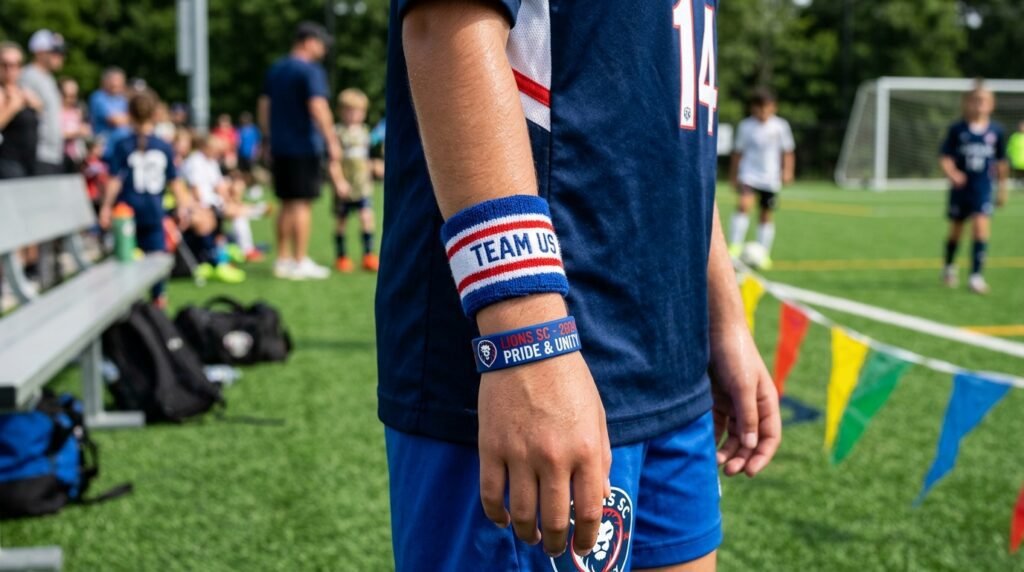
Sports wristbands for kids come in more styles than most parents expect: terry-cloth sweatbands, silicone team bands, sport-style medical IDs, and fitness trackers. Some help with sweat, some show team spirit, and some do both. A few look great and then get left in the gym bag because they pinch, itch, or slide off after ten minutes.
This guide helps you match the band to the sport, the season, and your child’s skin. You will find a comparison of common types, a simple fitting routine, heat and hydration reminders, and a six-step process for choosing. It is written for US parents, coaches, and league organizers.
Key Takeaways
- Pick the band by job: sweat control, team identity, ID or medical alert, or activity tracking.
- Check league and school rules first. Many programs limit jewelry and hard objects.
- Fit matters more than style. A band that is too tight or too loose causes most problems.
- A wristband does not cool a child. Hydration, rest, and heat-index awareness do.
- If a band causes redness or itching, take it off and talk to a pediatrician.
What Counts as Sports Wristbands for Kids?
“Sports wristbands for kids” is a wide category. It includes anything worn on the wrist for athletic activity:
- Sweatbands: absorbent cloth bands used to wipe sweat from the forearm and hand.
- Silicone team or awareness bands: colored bands with a team name, number, or message.
- Sport-style ID bands: durable bands with a child’s name or contact details.
- Fitness trackers: wrist-worn devices that count steps or activity.
- Coach and playbook bands: wrist cuffs that hold a small play card.
- Event and tournament bands: single-use bands for entry or access.
For a wider overview of wristband categories, start with our main guide:
Wristbands for Kids: 7 Popular Types and How to Choose
Why Kids Wear Them
Team Identity and Motivation
A matching band makes a child feel part of the group. For younger players, that can be as motivating as the game itself. Many families also like a band as a keepsake from a season or tournament.
Practical Sweat Control
Sweatbands help keep sweat off the hands and forearms, which can matter for grip in sports like basketball or tennis. They do not change how well a child’s body handles heat. More on that below.
ID and Safety
Kids move around in crowded gyms, fields, and parking lots. A band with a first name and parent phone number can help staff reunite a lost child with a parent.
For lost-child concerns in busy places, our ID band guide goes deeper:
Kids’ ID Wristbands: Types, Features, and Smart Choices
Getting Kids to Move More
Wristbands will not turn a couch fan into an athlete, but they can add a little fun to being active, and activity matters. The CDC says children and adolescents ages 6 through 17 should get 60 minutes or more of moderate-to-vigorous physical activity daily. A 2024 report card from the Physical Activity Alliance, summarized by Healio, found that only about one in five US youths in that age range meets the recommendation. A band your child actually likes wearing is a small, low-cost way to support the habit.

Types of Sports Wristbands Compared
Use this table to see the main trade-offs. It describes general characteristics, not specific brands.
| Type | Best for | Strengths | Limits |
|---|---|---|---|
| Terry-cloth sweatband | Basketball, tennis, running, gym class | Absorbs sweat, soft, washable | Does not show text well; can feel warm |
| Silicone team band | Team spirit, season keepsake | Colorful, easy to clean, can carry text | Can trap sweat; fit varies |
| Sport medical ID band | Kids with allergies or conditions | Made to hold health details | Needs careful wording; ask a doctor |
| Fitness tracker | Older kids who like data | Tracks steps and activity | Screen, battery, cost, privacy questions |
| Coach or playbook band | Older players in team sports | Holds a play card | Bulky; may break league rules |
| Event or tournament band | Meets, camps, tournaments | Cheap, single use | Not for daily wear |
Materials, Fit, and Skin Comfort
Most complaints about sports wristbands for kids come back to two things: material and fit.
Common Materials
- Cotton or terry cloth: soft and absorbent. It can get heavy and slow to dry when soaked.
- Nylon blends: lighter and quicker to dry, often with a hook-and-loop closure.
- Silicone: flexible, easy to rinse, and widely used for team bands. Because it does not absorb sweat, moisture can sit against the skin.
- Metal parts: clasps, buckles, or plates. These are the most likely to cause a reaction in a child who is sensitive to nickel.
Why Sweat and Friction Matter
Sport is a harder test for a band than a school day. Contemporary Pediatrics notes that sweat or friction can cause metal to leach from buttons, zippers, buckles, and jewelry, and nickel is the most common cause of metal sensitivity. If your child gets a rash where a band or clasp touches the skin, remove it and see a pediatrician. If you are not sure what caused it, switch to a band with no exposed metal.
Getting the Fit Right
Sizes differ by brand, so use the seller’s chart.
- Measure the wrist with a soft tape, just above the wrist bone.
- Compare the number with the size chart, not with a general age guide.
- Check that you can slide one finger under the band.
- After play, look for deep dents or red lines. Those suggest it is too tight.
- Re-measure each season. Growing kids change quickly.

Heat, Sweat, and Hydration: What a Wristband Can and Cannot Do
A sweatband manages the sweat on your child’s arm. It does not help the body cool down, and it should never be treated as a heat-safety tool.
A fact sheet from the Onondaga County Health Department points out that kids do not cool down as easily as adults because they sweat less. It suggests watching the heat index, building in hydration breaks every 10 to 30 minutes depending on conditions, and moving or canceling activity when the heat index goes above 95°F. It also recommends cutting back on heavy or heat-trapping gear.
The CDC youth heat guidance adds that hydration, rest, and gradual adjustment to hot weather help reduce the risk of heat illness in young athletes. None of this changes with a wristband on.
A few practical points:
- Take bands off during breaks if your child feels warm or sweaty underneath.
- Do not add layers because a band “keeps sweat off.”
- Follow your coach’s and league’s heat rules before anything else.

Sport-by-Sport Guide
Rules and comfort vary widely, so treat this as a starting point and check your league’s rules.
Soccer
Many leagues restrict jewelry for safety. A thin cloth sweatband may be accepted where a hard silicone band is not. Ask the coach.
Basketball
Sweatbands are popular for grip and wiping the hands. Choose a snug but not tight cloth band that will not slide down into the palm.
Swimming and Water Play
Cloth soaks up water and becomes heavy. A silicone band is a common choice near water, but check whether the pool or team allows it.
Baseball and Softball
A wrist sweatband can help when batting gloves get slick. Keep it low-profile so it does not catch on equipment.
Gymnastics and Martial Arts
These programs often limit anything that could catch or hurt a partner. Ask before bringing a band, and expect that hard or bulky bands may not be allowed.
Running and Track
Light, breathable bands work best. A thin sweatband or a simple team band is usually enough for a school meet.
How to Choose: 6 Steps
- Check the rules. Ask the coach or league what is allowed for this sport.
- Define the job. Sweat control, team color, ID, or tracking?
- Pick the material. Choose cloth or nylon for sweat, silicone for team or ID bands, and avoid exposed metal for sensitive skin.
- Measure and compare. Use the seller’s size chart.
- Test at home. Have your child wear it for a short workout and check the skin afterward.
- Order spares. Kids lose bands. A backup saves a last-minute scramble.
Fitness Trackers for Young Athletes
Some older kids like tracking steps or activity. A tracker can be fun, but it comes with extra questions that a plain band does not:
- Screen time: will the device add to it?
- Privacy: what data does it collect, and who can see it?
- Rules: many programs do not allow smart devices during play.
- Fit and skin: the band material and clasp still matter, especially for sweaty play.
Read the manufacturer’s age guidance and privacy information before buying. For most younger kids, a simple sweatband or silicone band is easier and cheaper.
A Realistic Example
Hypothetical example for illustration only. This is not a real case or customer story.
A 10-year-old plays recreational soccer in the fall and basketball in the winter. Her parent wants one band for each season.
For soccer, the league handbook says jewelry is not allowed during games, so the family picks a team silicone band for practice and the sideline only. For basketball, her gym allows soft cloth sweatbands, so she gets a snug terry-cloth band to keep her palms dry.
She tries each band for one short workout at home first. After soccer practice, the silicone band leaves a faint red line, so the family goes up a size and adds a rule: take it off during water breaks and dry the skin underneath. The new fit works. At tournaments, they send her to the games with just her sweatband and keep the team band in her bag.
Practical Tips and Care
- Wash cloth bands after every few uses. Sweat builds up fast.
- Rinse silicone bands. Warm water and mild soap are usually enough.
- Dry the skin. Moisture under a band can irritate sensitive skin.
- Rotate bands. Having two lets one dry while the other is in use.
- Label bands for team use. A first initial or number prevents mix-ups in the dugout.
- Replace worn bands. Stretched elastic or cracked silicone does not hold fit.
- Keep it simple for little kids. A one-piece band without charms is the safest starting point.
Ordering Team Bands: A Checklist for Coaches and Organizers
If you are ordering sports wristbands for kids in bulk for a team, club, or camp, a little planning avoids the most common headaches.
Before You Order
- Ask families about skin sensitivities. A quick note on the sign-up form catches allergies or past reactions before bands are printed.
- Check league and facility rules. Some leagues limit jewelry, and some fields or pools have their own policies.
- Choose a simple design. A team name, number, or color is easier to read and cheaper to fix than a long slogan.
- Plan for sizes. Kids on one team can span a wide age range. Ask the supplier about adjustable or multiple size options, and order a few extra.
- Proof the text. Spelling errors on a whole-team order are expensive. Have two people check names and numbers.
- Ask about testing. Ask the supplier whether the bands are made and tested as children’s products, and whether they contain small detachable parts or exposed metal.
- Allow time. Custom orders can take longer than expected, so order well before the first game or tournament.
On Day One
Hand out bands before practice, show kids how to put them on, and tell parents who to contact if a band causes redness or itching. Remind players that bands can come off during breaks. For a younger team, it helps to have a few spares in the equipment bag.

Common Mistakes to Avoid
Most problems with sports wristbands for kids are easy to prevent.
- Choosing by looks alone. A cool design does not matter if it itches or slips.
- Skipping the rules. A band that is not allowed on the field ends up unused.
- Buying too tight. A snug fit is fine, but deep marks mean the band is too small.
- Leaving a wet band on. Sweat and pool water sitting against the skin for hours can irritate it. Rinse, dry, and give the skin a break.
- Ignoring metal parts. Exposed clasps and buckles are the usual suspects when a child gets a rash.
- Treating a band as heat protection. It manages sweat on the arm. It does not cool the body.
- Forgetting about comfort. If a child keeps pulling at a band, try a softer material or a different width before giving up.
If Your Child Dislikes Wearing Bands
Some kids simply do not like the feel of anything on their wrists. Start with short wear at home, let your child choose the color, and try a soft cloth band before a firm silicone one. If your child still resists, it is fine to skip it. A band is optional gear, not a requirement for playing.
Frequently Asked Questions
What are the best sports wristbands for kids?
There is no single best option. Cloth sweatbands suit basketball and tennis, silicone bands suit team spirit and water, and sport-style medical IDs suit kids who need an alert. Match the band to the sport, the rules, and your child’s skin.
Are silicone sports wristbands safe for kids?
Silicone bands are widely used and are generally easy to clean. Safety depends on the specific product and your child’s skin, so check the seller’s information, make sure the fit is comfortable, and stop wearing the band if redness or itching appears.
Do sweatbands actually help kids?
Sweatbands can help keep sweat off the hands and forearms, which may improve comfort and grip. They do not cool the body or replace hydration and rest.
How tight should a kids’ sports wristband be?
Snug enough to stay in place, loose enough to slide one finger underneath. Deep dents or red lines after wearing it suggest it is too tight.
Can kids wear wristbands during games?
It depends on the league and sport. Many programs have rules about jewelry or hard objects. Ask the coach or check the handbook first.
Can my child wear a sports wristband in the pool?
Silicone bands are a common choice near water, but pools and swim teams have their own rules. Ask first and rinse the band after.
What size sports wristbands for kids should I buy?
Measure your child’s wrist with a soft tape and compare it with the seller’s chart. Sizes differ by brand, so avoid guessing by age.
Should a child wear a medical ID during sports?
If your child has an allergy or health condition, ask their doctor about a medical ID and how to wear it during activity. A team band is not a substitute.
Do wristbands prevent heat illness?
No. Heat safety relies on hydration, rest breaks, watching the heat index, and following coach guidance.
Conclusion
The right sports wristbands for kids start with the sport, not the style. Check the rules, choose a material that suits your child’s skin, measure the wrist, and test the band before game day. Remember that a band can add comfort and team spirit, but it cannot cool a child down.
Author
Aasma Shahzad writes research-based guides on trustmags.com, a multi-niche content site. This article is an editorial summary of publicly available guidance from the Centers for Disease Control and Prevention and the Onondaga County Health Department. It reflects careful reading of those sources, not clinical experience or personalized medical advice. This content is educational and does not replace advice from a qualified healthcare professional. Information verified against available sources.
Sources & References
- CDC, Physical Activity Guidelines for School-Aged Children and Adolescents
- CDC, Heat illness: Youth (6-13) prevention tips
- Onondaga County Health Department, Youth and Sports in Hot Weather
- Healio, 1 in 5 youths meet daily physical activity guidelines