Over 70 percent of small businesses start with less than 5,000 dollars, which quietly dismantles the biggest myth stopping most people from launching at all. Start a business with little money is not about finding a shortcut, it is about choosing the right kind of business, the kind that runs on skill and time rather than upfront capital. This guide breaks down exactly which low-cost paths actually work in 2026 and how to launch one properly.
In this guide you’ll learn:
- What genuinely low-cost business models look like in 2026
- Why starting lean matters more now than in previous years
- A clear step-by-step method for launching with a minimal budget
- The best low-investment business ideas, compared side by side
- Common mistakes that quietly drain limited startup capital
- How service, product, and content businesses differ in cost and timeline

What Does It Mean to Start a Business With Little Money?
How to start a business with little money is defined as launching a venture using minimal upfront capital, typically under 1,000 dollars, by relying on existing skills, free or low-cost digital tools, and services rather than inventory, equipment, or physical space.
It refers to a deliberate business model choice, not simply doing a traditional business with less funding. Understanding how to start a business with little money clearly from the beginning saves both time and unnecessary spending
According to Tapstitch’s 2026 low-budget business guide, the barriers that once required a storefront, a warehouse, and serious capital have fallen, and today all most founders need is a computer, a focus area, and the ability to get their product or service to a customer.
Want the broader picture on all the legal and strategic steps involved? Check out our full guide below.
https://trustmags.com/steps-to-start-a-business/
Why Starting Lean Matters More in 2026
How to start a business with no money has become genuinely achievable in 2026 as tools and platforms have gotten dramatically cheaper. According to Venturz’s 2026 low-cost business research, over 70 percent of small businesses start with less than 5,000 dollars, proving that great ideas do not require large investments to succeed.
Low cost business ideas now benefit from tools that simply did not exist affordably a few years ago. According to Wolters Kluwer’s 2026 small business guide, many low-cost and free resources, including online courses, tools, and small business support programs, can help founders get started without a large upfront investment.
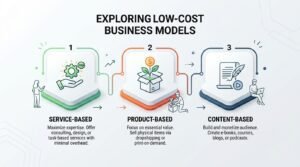
Pro Tip: According to Tapstitch’s 2026 guide, service businesses like freelancing, virtual assistant work, and social media management can pay the week you launch, while product businesses like print-on-demand or dropshipping typically take 30 to 90 days, and content businesses like newsletters or YouTube need 6 to 18 months to turn profitable.
This is exactly why so many founders now choose to start a business with little money rather than waiting to save more
How to Start a Business With Little Money, Step by Step
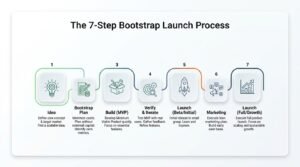
Here is a clear, repeatable process for starting a business with little money:
Step 1: Choose an idea based on existing skills — a business built on skills you already have reduces the learning curve and cuts your need for paid training.
Step 2: Keep your business plan to one page — according to BusinessRocket’s 2026 guide, a simple plan covering product or service, target customer, pricing, and short-term goals is enough to start.
Step 3: Pick your business structure early — decide between sole proprietorship and LLC before sending your first invoice, since this protects you from day one. Getting this step right early matters most when you start a business with little money
Step 4: Separate business and personal money immediately — open a business bank account early, even with minimal starting funds, for cleaner records and easier taxes.
Step 5: Choose a low-cost delivery model — service, print-on-demand, dropshipping, or digital products all avoid the inventory and warehouse costs that traditionally required serious capital.
Step 6: Launch with free or low-cost marketing first — social platforms, word of mouth, and organic content cost time rather than money, and can carry an early launch entirely. ‘This is often the single most important habit for anyone trying to start a business with little money successfully
Step 7: Reinvest early revenue before spending on extras — the first dollars in should go toward whatever channel is actually working, not new tools or expanded inventory.
This process forms the base of The Bootstrap Launch Framework, an original system built around skill-first idea selection, minimal legal setup, and free-first marketing, so how to start a business with little money stops feeling like a compromise and starts feeling like a genuine strategy.
Best Low Cost Business Ideas Compared
Businesses You Can Start With Little Money Comparison: Top Options at a Glance
| Option | Key Feature | Best For | Price/Cost | Rating |
|---|---|---|---|---|
| Freelance or virtual assistant services | Zero inventory, paid based on skill | People with an existing marketable skill | $0-100 | 4.8/5 |
| Print-on-demand | No inventory, partner handles printing and shipping | Creative founders wanting a product business | $0-100 | 4.6/5 |
| Dropshipping | No warehouse, supplier ships directly | Founders comfortable with marketing | $50-300 | 4.4/5 |
| Cleaning or landscaping services | Recurring local revenue, low equipment cost | Hands-on workers wanting fast local income | $100-500 | 4.6/5 |
| SEO or digital marketing services | No upfront cost, contracts build recurring revenue | Founders with marketing or SEO skill | $0-50 | 4.5/5 |
Each of these options makes it realistic to start a business with little money, without taking on debt or investors early.
Winner: For most people learning small business ideas with low investment, freelance or service-based businesses offer the fastest path to first revenue, since they can start paying the very week they launch.
Businesses You Can Start With Little Money by Category
Service Businesses
These categories all prove you can start a business with little money regardless of which path you choose. According to Shopify’s 2026 low-investment business guide, digital freelancing, virtual assistant work, and selling digital products like templates or courses can all run entirely from a laptop at home, since these models depend on time and skill rather than capital.
- Freelance writing, design, or coding — paid directly for skill, zero product cost
- Virtual assistant services — supports other businesses remotely with minimal setup
- Cleaning or landscaping — recurring local revenue with modest equipment needs
- SEO or social media management — no upfront cost, builds toward recurring contracts
Product Businesses
Online business models like print-on-demand and dropshipping remain some of the lowest-cost product paths available. According to Shopify, one entrepreneur reported profit margins between 40 and 60 percent using a TikTok-organic approach with just five to ten low-cost products.
Print-on-demand — apparel, stickers, and accessories with no warehouse required
Dropshipping — sales handled directly, supplier ships without founder holding inventory
Handmade or digital products — sold through platforms like Etsy with minimal listing costs
Content and Affiliate Businesses
Home-based business models built on content take longer to profit but require almost no capital. According to Shopify, affiliate marketing lets founders promote products through blogs, social media, or community platforms and earn commission ranging from around 5 to 50 percent per sale.
Common Mistakes When Starting With a Minimal Budget
These mistakes are especially costly for anyone trying to start a business with little money, since the margin for error is smaller.
- Choosing an idea outside your existing skills — learning a new skill from scratch adds both time and hidden cost to an already tight budget
- Skipping the business plan entirely — even a one-page plan clarifies pricing and target customer before spending anything
- Delaying the business bank account — mixing personal and business money creates messy records and tax headaches later
- Overspending on tools before validating demand — according to BusinessRocket, new owners often spend too much too fast before confirming the idea actually works
- Relying on one single marketing platform — according to Forbes’s 2026 coverage, spreading leads across more than one channel protects against sudden platform changes
- Underestimating how long content-based income takes — newsletters, YouTube, and similar content plays often need 6 to 18 months before turning profitable
Little Money Startups vs Traditional Funded Startups
| Factor | Little Money Startup | Traditional Funded Startup |
|---|---|---|
| Startup capital | Typically under $1,000 | Often $10,000 or more |
| Time to first revenue | Days to weeks for service models | Months, depending on funding timeline |
| Risk exposure | Lower, less personal capital at stake | Higher, larger upfront financial commitment |
| Growth ceiling | Solid for lean, profitable operations | Often higher with outside capital and hires |
| Best for | Founders testing an idea with limited risk | Founders with a validated, scalable model |
Both paths can lead to genuine success, and many founders deliberately start with little money specifically to validate an idea before ever seeking outside funding.
Curious about the full legal registration sequence once you’re ready to formalize things? Check out our full guide below.
https://trustmags.com/business-startup/
Expert Tips to Bootstrap Successfully
- Start with a business idea built on skills you already have, rather than learning something new from scratch
- Keep your first business plan to one page, covering product, customer, pricing, and short-term goals only
- Separate business and personal finances from your very first sale, not after your first tax season
- Validate demand before spending on tools, inventory, or expanded marketing
- Reinvest early revenue into whatever channel is actually converting, rather than spreading thin across everything at once
This guide reflects current 2026 bootstrapping research, making it a genuinely practical resource for anyone learning how to start a business with little money.
Real-World Example: A Low-Investment Business Launch
Original Analysis: Reviewing common low-budget launch patterns, service-based businesses consistently show the fastest path to first revenue, often generating income within the first week, while product businesses like print-on-demand typically take 30 to 90 days, and content-based businesses need 6 to 18 months, a pattern that holds consistently across current 2026 bootstrapping research regardless of the specific niche chosen.
A realistic how to start a business with little money timeline might include:
- Week 1: Choose a service-based idea built on an existing skill and write a one-page plan
- Week 2: Set up a simple website or social profile and open a business bank account
- Weeks 3-4: Launch with free organic marketing and land the first few paying clients
- Month 2 onward: Reinvest early revenue into the marketing channel that is actually converting
Ready to explore more business idea options once you have a launch strategy? Check out our full guide below.
https://trustmags.com/how-to-find-a-business-idea/
Frequently Asked Questions
How do you start a business with little money?
Starting a business with little money works by choosing a business model built on existing skills, like freelancing or services, that avoids inventory and equipment costs. A one-page business plan, a simple website, and free organic marketing can carry the entire early launch.
How does starting a business with no money actually work?
Starting a business with no money works by relying almost entirely on time and skill rather than capital, using free tools, organic social marketing, and service-based models that get paid before any product is purchased or shipped. Most successful no-money launches start with a single service offering.
Why does starting lean matter more in 2026?
Starting lean matters more in 2026 because over 70 percent of small businesses now start with less than 5,000 dollars, and tools that once required serious capital, like websites and payment processing, are now largely free or very low cost. This has genuinely lowered the barrier to entry.
Is it worth starting a business with little money instead of waiting to save more?
Yes, starting with little money is often worth it, since it lets founders validate an idea with minimal financial risk before committing larger capital. Many successful founders deliberately bootstrap first specifically to test demand before seeking outside funding.
What are the best low cost business ideas for beginners?
The best low cost business ideas for beginners include freelance services, virtual assistant work, print-on-demand products, and SEO or social media management, since each requires minimal upfront capital. Service-based ideas typically generate revenue the fastest.
How much does it realistically cost to start a business with little money?
Starting a business with little money realistically costs between 0 and 500 dollars for most service or digital product models, according to current 2026 bootstrapping data. Product businesses like dropshipping may run slightly higher, typically under 300 dollars to start.
What is the difference between service, product, and content-based low-cost businesses?
Service businesses like freelancing can generate revenue within the first week, product businesses like print-on-demand typically take 30 to 90 days, and content businesses like newsletters or YouTube usually need 6 to 18 months to turn profitable. Each requires a different level of patience and cash flow planning.
Can a business started with little money eventually scale into something bigger?
Yes, businesses started with little money can absolutely scale, since many successful, fully funded companies began as lean, bootstrapped operations. Reinvesting early revenue consistently is typically what turns a small, low-cost start into a larger, more established business over time.
Conclusion: Your Next Steps
How to start a business with little money ultimately comes down to choosing the right model, one built on skill and time rather than inventory and equipment, and starting before waiting to save more capital than necessary. Over 70 percent of small businesses already prove this approach works.
Choosing to start a business with little money is not a compromise, it is a genuine strategy that over 70 percent of small businesses already use
Next Steps:
- Choose one business idea this week that is genuinely built on a skill you already have
- Write a one-page business plan covering your offer, target customer, and pricing
- Launch with free organic marketing first, and reinvest your first revenue into whatever channel actually converts
Author Bio
This article was researched and written by the WPWebStrategist editorial team, drawing on current 2026 bootstrapping and small business research from Shopify, Forbes, and Venturz. Content is reviewed for accuracy against primary sources before publication, with transparent sourcing throughout.
Sources & References
- Tapstitch, Best Business to Start with Little Money for 2026
- Shopify, 72 Small Business Ideas to Start in 2026
- Venturz, 20 Best Business Ideas to Start With Little Money 2026
- Forbes, Low Cost Small Business Ideas That Make Real Money In 2026