

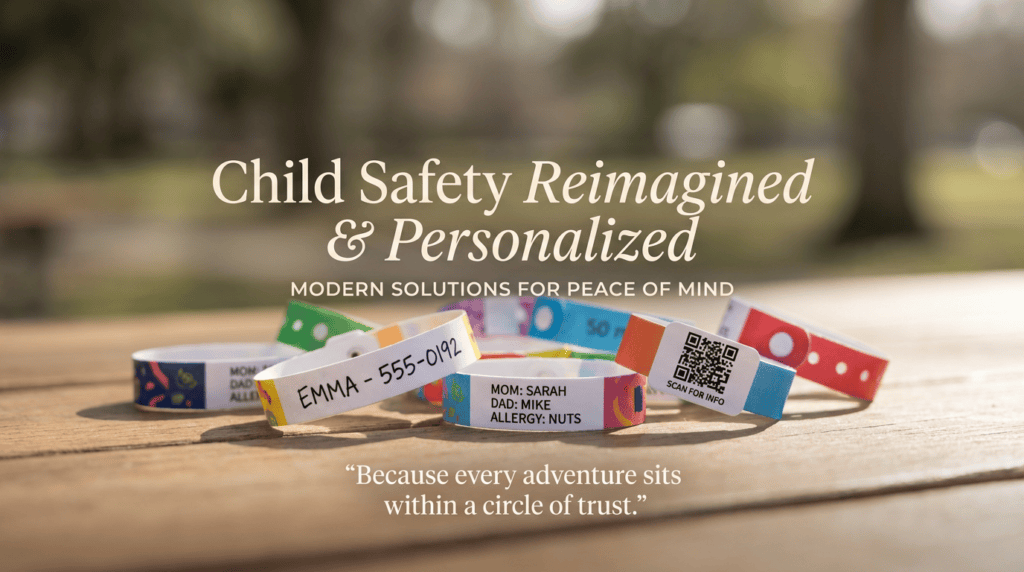
Kids ID wristbands can display information that helps someone identify a child or contact a caregiver when needed. Depending on the design, a wristband may show a parent’s phone number, a medical alert, or a code that links to a digital contact profile.
Parents may consider these bands for family outings, school trips, crowded events, travel, or children who need help communicating important information. However, an ID wristband is only one part of a safety plan. It does not replace supervision, teaching children how to seek help, or arranging a clear plan with other caregivers.
The right wristband should fit comfortably, display information clearly, and protect the child’s privacy as much as possible. Before buying, compare the available ID methods, understand what information each method reveals, and check how the product works.
If you want to compare different styles before choosing an identification band, start with our complete guide to wristbands for kids, which explains common types, materials, and uses.
In this guide, you will learn:
- The main types of kids’ identification wristbands.
- What information may be useful on an ID band.
- How QR code wristbands differ from printed bands.
- How to consider privacy and readability.
- What to check before buying an ID wristband.
What Are Kids ID Wristbands?
Kids ID wristbands are wearable identification bands designed to display or provide access to useful information about a child. Some show contact details directly, while others have a space for handwritten information or use a QR code to open a digital page.
The purpose is to give a caregiver, event worker, or other helper a way to identify the child or contact the family when necessary. The amount of information displayed depends on the product and the family’s needs.
The American Academy of Pediatrics’ HealthyChildren.org recommends that families maintain useful identification information and consider identifying wristbands or information cards in appropriate situations. Families should still use active supervision and teach children how to ask a trusted adult for help.
7 Types of Kids ID Wristbands
1. Printed emergency contact wristbands
These bands display contact information directly on the surface. Depending on the design, the information may include a caregiver’s phone number or another short contact detail.
The main advantage is that the information can be read without scanning a code or accessing a website. Before buying, check that the text is large enough to read and that the information is durable.
2. Write on ID wristbands
Write on wristbands have an area where a caregiver can add information with a suitable pen or marker. They may be useful when details need to be changed or when a family wants to prepare a band for a particular outing.
Check which writing tools work with the material and whether the writing may smear when wet. Follow the manufacturer’s instructions before wearing the band.
3. Silicone ID bracelets
Silicone ID bracelets are flexible bands that may display printed or engraved information. Some designs are intended for repeated wear, while others are made for specific medical or identification purposes.
Check the actual product dimensions and how the information is applied. A decorative silicone bracelet should not automatically be treated as a medical ID product unless the manufacturer specifically designs it for that purpose.
Looking for a band with a child’s name, initials, or a custom message? Explore our guide to personalized wristbands for kids for more design ideas and customization tips.
4. Medical ID wristbands
Medical ID wristbands can communicate a relevant medical condition, allergy, or other essential information. They may be useful when a child needs important details to be visible during an emergency.
The information should be accurate and easy to read. Ask the child’s healthcare professional what information is appropriate when the band is intended to communicate a medical condition. An ID band does not replace medical records or treatment instructions.
5. QR code wristbands for kids
QR code wristbands contain a scannable code that opens a digital page or service. Depending on the provider, the page may offer contact information or other details entered by a parent or guardian.
Before choosing this option, find out what a person sees after scanning, whether the page requires an internet connection, and how the service stores and protects information. A QR code is useful only if it works and the linked information stays current.
6. Adjustable ID wristbands
Adjustable bands allow the fit to be changed using a clasp, sliding closure, or another mechanism. They can be helpful when a fixed size does not fit the child’s wrist comfortably.
Check that the closure is secure without being difficult or uncomfortable to wear. The band should not pinch the wrist or slip off easily.
7. Disposable event ID wristbands
Disposable ID wristbands are commonly used for events, camps, school outings, and group activities. Some can be written on, while others have a printed area for a name or contact detail.
These are usually selected for a specific period rather than long term use. Check whether the material is water resistant, whether the closure is secure, and whether the band can be removed without damaging the child’s skin.
What Information Should an ID Band Include?
The right information depends on the purpose of the band. For a crowded family outing, a caregiver’s phone number may be useful. For a medical ID, a relevant medical alert may be more important.
A simple approach is to include only what is needed to help someone take the next appropriate step.
Contact information
A parent’s or caregiver’s phone number may help a finder contact the family. Before making the number visible, consider whether you are comfortable displaying it publicly.
Some digital ID services offer a way to contact a guardian without showing the phone number directly. Review the service’s privacy information before choosing this type of product.
Medical information
A medical ID may identify a relevant allergy or medical condition. Keep the information accurate and concise, and ask a healthcare professional for guidance if you are unsure what should be shown.
Do not assume that a general decorative bracelet provides a reliable medical alert. Check that the product is designed for the intended purpose.
Information to leave off
Avoid adding a child’s full home address, daily routine, school schedule, or other unnecessary personal details to a band that strangers can easily read. A name alone is not always needed for a contact band, and a large amount of personal information may create avoidable privacy concerns.
How to Choose Kids ID Wristbands
Step 1: Identify the main purpose
Decide whether the band is for a family outing, school trip, medical alert, or regular use. This helps determine what information is needed and whether a printed, write on, or digital format makes sense.
Step 2: Choose a readable format
Printed information should be clear enough to read quickly. If using a QR code, make sure it can be scanned from the actual band and that you understand what information the scan reveals.
Step 3: Check size and comfort
Measure the child’s wrist and compare it with the manufacturer’s size guide. Avoid a band that pinches, leaves marks, or slips off easily.
Step 4: Review privacy
Check what information is visible to anyone who sees the band. For a digital product, read the privacy policy and find out how to update or delete the child’s information.
Step 5: Test the information
Before an outing, verify that the phone number is correct or that the QR code opens the intended page. Make sure the information is current and that another caregiver knows how the band works.
If the wristband is also intended for sports practice or team activities, our guide to sports wristbands for kids covers comfort, materials, and care.

Pro Tip: Treat an ID wristband as a backup contact method, not a complete safety system. Keep supervising children, explain how to seek help, and agree on a family meeting point when visiting crowded places.
Privacy, Fit, and Care
Are QR code wristbands private?
Privacy depends on the product and service. A QR code may show a public profile, open a page containing personal details, or use a service that lets a finder contact a guardian. Do not assume that scanning a QR code is private by default.
Before registering a child, check which details are collected, who can access them, whether the service shares them, and how to remove them later. The Federal Trade Commission provides general guidance for parents about children’s personal information and online privacy.
How should ID wristbands be maintained?
Follow the product’s cleaning instructions. Check printed text, writing, closures, and QR codes regularly. Replace the band if the details become unreadable or the material becomes damaged.
For digital wristbands, test the QR code after updating contact details. Keep a separate family emergency plan and make sure other caregivers know what to do if a child becomes separated from the group.
How do ID wristbands compare?
| Type | How information is accessed | Main benefit | Main consideration |
|---|---|---|---|
| Printed contact band | Read directly | No scan needed | Information is visible |
| Write on band | Read handwritten text | Details can be customized | Writing may fade |
| Medical ID band | Read the medical alert | Important details are visible | Must be accurate |
| QR code band | Scan to open a linked page | May limit visible details | Service and connectivity matter |
| Disposable event band | Read printed or written details | Useful for short events | Usually not intended for long term wear |
The best choice is the one that provides the necessary information in a format a helper can actually use.
A Practical Example: Preparing for a Family Outing
Imagine a family planning a busy day at an amusement park. A parent chooses an ID wristband that displays a contact number and checks that the band fits comfortably. The family also agrees on a meeting point, explains which park staff members the child can approach, and makes sure another caregiver knows the plan.
If the family prefers a QR code band, the parent tests the code and reviews the information that appears after scanning. Both approaches require preparation. Neither replaces adult supervision.
This is a hypothetical example, not a report of a real safety trial.
Frequently Asked Questions
What are kids ID wristbands used for?
Kids ID wristbands can display contact information, medical alerts, or a link to a digital identification profile. They may help someone contact a caregiver, but they do not replace supervision or a family safety plan.
Are emergency contact wristbands for kids useful?
They can provide a simple way to make caregiver contact information available when needed. Choose a readable format, keep the information current, and consider how much personal information should be visible in public.
What are QR code wristbands for kids?
QR code wristbands have a code that can be scanned to open a digital page or service. The information available depends on the provider. Check privacy settings, internet requirements, and how to update the profile before buying.
What information should I put on a child’s ID bracelet?
Use only information needed for the intended purpose, such as a caregiver’s contact number or a relevant medical alert. Avoid unnecessary details such as a full home address or daily schedule.
Are silicone ID bracelets reusable?
Many silicone bracelets are designed for repeated wear, but the product’s construction and intended use matter. Check the manufacturer’s care instructions and replace the band if the information becomes unreadable or the material is damaged.
Can ID wristbands replace adult supervision?
No. An ID wristband is a backup identification tool. Children still need appropriate supervision, guidance about seeking help, and a clear plan for what to do if they become separated from a caregiver.
How do I choose the right ID wristband size?
Measure the child’s wrist and compare it with the product’s size chart. The band should fit securely without pinching or slipping off. Check the fit again as the child grows.
How do I protect my child’s privacy with a QR wristband?
Read the provider’s privacy policy, find out what information a scan reveals, and avoid adding unnecessary details. Check how to update or delete the child’s profile and test the code before use.
Conclusion
Kids ID wristbands can provide a practical way to display contact details or important medical information. Printed bands are easy to read directly, while QR code options may provide access to a digital contact page. Each format has different privacy and usability considerations.
Choose a band that fits comfortably, provides the information needed for its purpose, and keeps unnecessary personal details private. Test the information before an outing and keep a broader safety plan in place.
Next steps:
- Decide what information the wristband needs to provide.
- Compare printed, write on, medical, and QR code styles.
- Check fit, privacy, and contact details before using the band.
Author Bio and Editorial Disclosure
This article was prepared for TrustMags.com using the published guidance and sources listed below. No independent product testing or professional medical credentials are claimed. This article provides general information and is not a substitute for advice from a qualified healthcare professional or an individualized child safety plan.
References
- American Academy of Pediatrics, HealthyChildren.org, Preventing Child Abductions: https://www.healthychildren.org/English/safety-prevention/all-around/Pages/Preventing-Child-Abductions.aspx
- Centers for Disease Control and Prevention, Keeping Children Safe Away from Home: https://www.cdc.gov/children-and-school-preparedness/keeping-safe/index.html
- Federal Trade Commission, Protecting Your Child’s Privacy Online: https://consumer.ftc.gov/articles/protecting-your-childs-privacy-online
- Children’s Hospital of Philadelphia, ID Bracelets: https://www.chop.edu/centers-programs/safety-center/id-bracelets
3 thoughts on “Kids’ ID Wristbands: Types, Features, and Smart Choices”