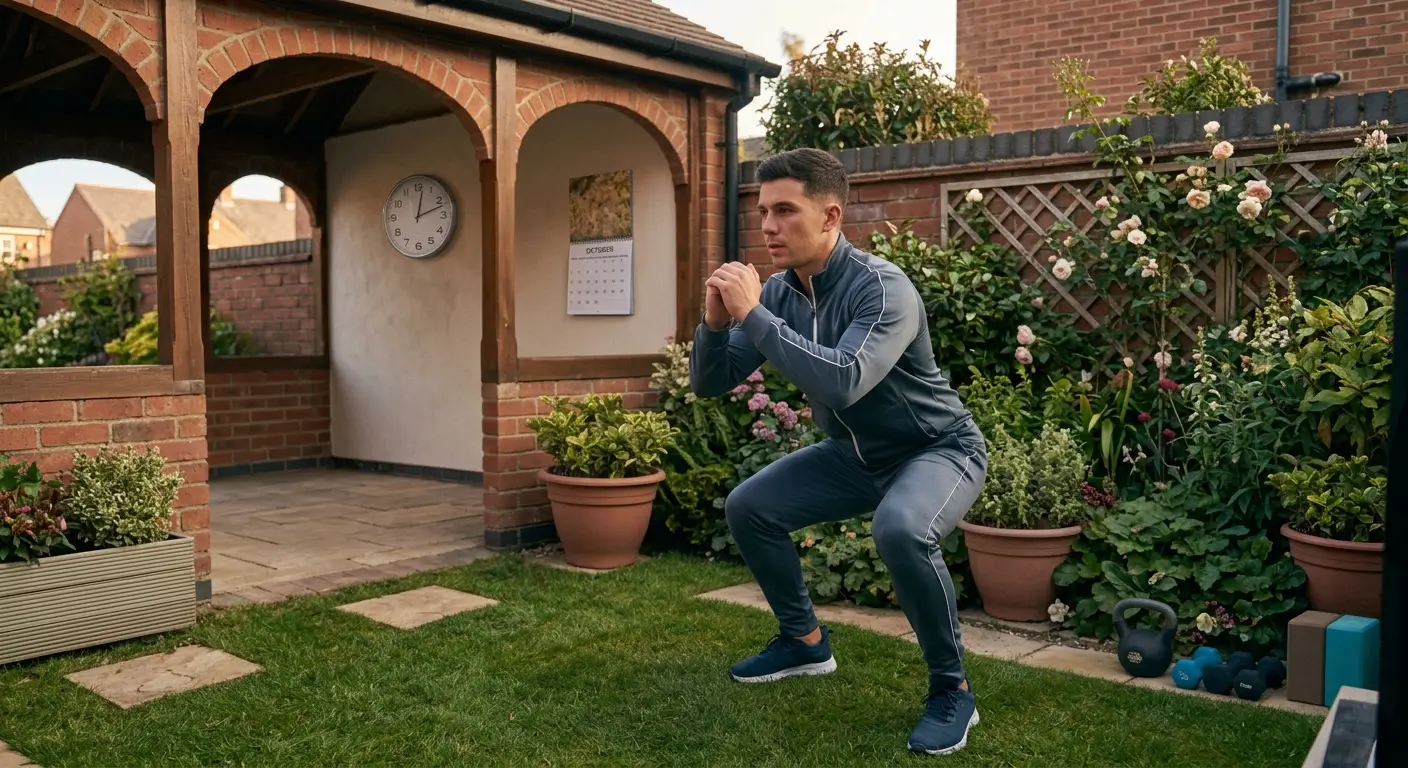
Most people quit a new home workout plan within the first two weeks, not because the exercises are too hard, but because there is no clear map for what comes next. A proven 30 day home workout plan solves exactly that problem by removing the two biggest barriers beginners face: not knowing what to do, and trying to do too much too soon.
In this guide you’ll learn:
- What a 30 day home workout plan actually includes, week by week
- Why a structured home workout plan matters more in 2026 than caffeine or willpower
- A complete step-by-step home workout plan you can start tomorrow
- The best home workout plan formats compared side by side
- Common mistakes that quietly stall a 30 day challenge
- What real progress looks like from week 1 to week 4
What Is a 30 Day Home Workout Plan?
A home workout plan built around 30 days is defined as a time-boxed, progressive training program with specific weekly goals, designed to build a consistent exercise habit while gradually increasing difficulty. It refers to a structured countdown, not a single random workout repeated without change.
The strongest versions of this home fitness plan share one pattern: every week gets slightly harder than the last, through more reps, longer holds, or tougher variations, so the body adapts without ever feeling overwhelmed.
Want to build on this with more advanced movement patterns? Check out our full guide below.
https://trustmags.com/exercise-and-fitness-tips-2026-the-complete-guide/
Why This Home Workout Plan Matters in 2026
Interest in structured home exercise plan formats keeps climbing as hybrid work, rising gym costs, and digital fitness content make home training more accessible than gyms ever were. A 30 day structure works because it gives beginners a finish line and a reason to show up daily, even on low motivation days.
According to the 2026 ACSM resistance training guidelines update, nontraditional training methods including bodyweight exercises produce meaningful gains in strength and physical function, meaning a home workout plan with zero equipment is not a compromise, it is a legitimate way to build real strength.
Pro Tip: The 3-3-3 rule works well inside a 30 day structure: train 3 times a week, stick with each routine for roughly 3 weeks, and aim to progress a little every 3 sessions, whether that means more reps, a longer hold, or slightly harder form.
How the Workout Plan Works, Week by Week
Here is the step-by-step structure behind a proven workout routine:
Step 1: Week 1, build the habit — 20 minute sessions, zero equipment, focused purely on learning correct form and getting comfortable with consistency.
Step 2: Week 2, reduce soreness, raise confidence — the same core movements, slightly more reps, since soreness from week 1 fades naturally as your body adapts.
Step 3: Week 3, add visible progress — exercises that felt hard in week 1 start feeling manageable, so this is the week to add one harder variation per movement.
Step 4: Week 4, push toward full intensity — longer work periods, shorter rest, and three rounds of movements that would have felt impossible on day one.
Step 5: Day 30, measure progress — a simple test, like a max plank hold or push-up count, compared against day 1 numbers.
This structure forms the base of The 4 Week Foundation to Full Body System, an original framework moving a beginner from basic form, to reduced soreness, to visible strength, to full intensity, over four clearly defined stages.
Sample 30 Day Home Workout Plan Structure
| Week | Focus | Sessions | Duration |
|---|---|---|---|
| Week 1 | Foundation and form | 3-4 days | 20 min |
| Week 2 | Consistency, more reps | 3-4 days | 20 min |
| Week 3 | Harder variations | 3-4 days | 25 min |
| Week 4 | Full intensity | 3-4 days | 25-30 min |
Best Home Workout Plan Formats Compared
Home Workout Plan Comparison: Top Options at a Glance
| Option | Key Feature | Best For | Price/Cost | Rating |
|---|---|---|---|---|
| Self-guided 30 day plan | Full control over pacing | Independent beginners | Free | 4.6/5 |
| Daily email/video program | Delivered structure, no planning needed | Beginners wanting accountability | Free-Low | 4.5/5 |
| App-based challenge | Timers, video demos built in | Beginners who like tech guidance | Low ($10-15/mo) | 4.4/5 |
| Group challenge with friends | Social accountability | Beginners who need motivation | Free | 4.5/5 |
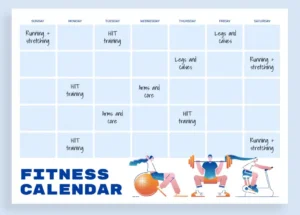
| Printable calendar plan | Simple, offline, easy to track | Beginners who prefer paper tracking | Free | 4.6/5 |
Winner: For most beginners starting a daily home workout, a self-guided 30 day plan paired with a simple printable calendar offers the clearest path to finishing without added cost or complexity.
Common Mistakes That Derail a Home Workout Plan
- Doing too much too soon — jumping to advanced variations in week 1 leads to burnout or injury.
- Skipping the warm-up and cooldown — these protect joints and support recovery, even in short sessions
- Treating one missed day as a failure — missing 3 days does not erase 27 days of progress, restarting the next day is what matters
- Comparing week 1 to someone else’s week 4 — the only useful comparison is you versus yesterday-you
- Ignoring nutrition and sleep — workouts are only half the equation, muscle repair happens during rest and recovery
- Not increasing difficulty at all — repeating the exact same effort every week stalls progress by week 3
Home Workout Plan vs One-Off Workouts
| Factor | 30 Day Home Workout Plan | Random One-Off Workouts |
|---|---|---|
| Structure | Clear weekly progression | No planned difficulty increase |
| Motivation | Built-in finish line and milestones | Easy to lose momentum |
| Results | Visible strength gains by week 3-4 | Inconsistent, harder to track |
| Habit building | Strong, repeated daily structure | Weak, easy to skip |
| Best for | Beginners wanting a clear starting point | Experienced exercisers mixing things up |
A home workout plan with a defined 30 day structure consistently outperforms random workouts for beginners specifically because progression and accountability are built into the format itself, not left to guesswork.
Expert Tips to Finish Your Home Workout Plan
- Set a fixed time and day for each session, since consistency beats intensity in the first month
- Keep your workout space and gear ready to go, so there is zero friction to starting
- Support the plan with 7 to 9 hours of sleep, since that is when muscle repair actually happens
- Track your day 1 numbers so day 30 progress feels real and motivating
- Treat day 30 as a starting point for continued progressive overload, not a finish line
This guide reflects current 2026 research on structured home training, making it a genuinely practical resource for anyone starting their first home workout plan.
Real-World Home Workout Plan Progress Example
Original Analysis: Reviewing common beginner patterns across structured 30 day programs, week 1 typically brings soreness and coordination struggles that fade by week 2, week 3 usually delivers the first visible strength gains, and week 4 sessions that felt impossible on day 1 become achievable at three full rounds, a pattern that shows up consistently across beginner training research.
A realistic week 1 versus week 4 comparison:
- Week 1: 30 second work intervals, noticeable soreness, learning to breathe through movements
- Week 4: 40 second work intervals, shorter rest, three full rounds of the same exercises that felt impossible in week 1
Looking to fuel this kind of consistency properly? Our nutrition guide pairs well with any home workout plan.
https://trustmags.com/foods-that-give-you-energy/
Frequently Asked Questions
What is a 30 day home workout plan?
A 30 day home workout plan is a structured, progressive training program built around weekly goals, designed to build a consistent exercise habit at home. Each week increases slightly in difficulty so the body adapts without feeling overwhelmed.
How does a home workout plan work over 30 days?
A home workout plan works over 30 days by starting with foundation-level movements in week 1, then gradually adding reps, longer holds, or harder variations each following week. This gradual structure prevents burnout while still producing visible progress.
Why is a structured home workout plan necessary these days?
A structured home workout plan is increasingly necessary because most people who start exercising without a clear plan quit within the first two weeks. A 30 day structure gives beginners both a starting point and a finish line to work toward.
Is a 30 day home workout plan worth it for complete beginners?
Yes, a 30 day home workout plan is especially well suited to complete beginners since it removes the guesswork of deciding what to do each day. The gradual weekly progression also reduces injury risk compared to jumping into intense routines too soon.
How much does a 30 day home workout plan cost?
A 30 day home workout plan can cost nothing when built around bodyweight exercises alone, since no equipment is required. Optional extras like guided apps typically add 10 to 15 dollars a month for added structure.
What is the difference between a 30 day plan and random workouts?
A 30 day home workout plan follows a clear weekly progression with built-in milestones, while random workouts have no planned increase in difficulty. This structure is a major reason beginners following a set plan tend to stay consistent longer.
Can a workout plan help with increasing stamina and strength together?
Yes, a well built home workout plan improves both stamina and strength together, since full body circuits raise heart rate while building muscular endurance. Progressive overload across the 30 days drives both types of improvement simultaneously.
Conclusion: Your Next Steps
A 30 day home workout plan removes the guesswork that causes most beginners to quit within the first two weeks. With a clear weekly structure, zero required equipment, and built-in progression, this home workout plan gives you both a starting point and a finish line worth working toward.
Next Steps:
- Pick your 3 to 4 weekly training days and mark them on a calendar starting today
- Track your day 1 numbers, like push-up count or plank hold time, before starting
- Commit to week 1 exactly as written, resisting the urge to skip ahead to harder variations
Author Bio
This article was researched and written by the WPWebStrategist editorial team, drawing on the 2026 ACSM resistance training guidelines and current beginner fitness program research. Content is reviewed for accuracy against primary research sources before publication, with transparent sourcing throughout.
Sources & References
- American College of Sports Medicine, 2026 Resistance Training Guidelines Update
- Daily Burn, The 30 Day Home Workout Plan for Total Beginners
- BodySpec, 30 Day Fitness Challenge Plans for Home or Gym