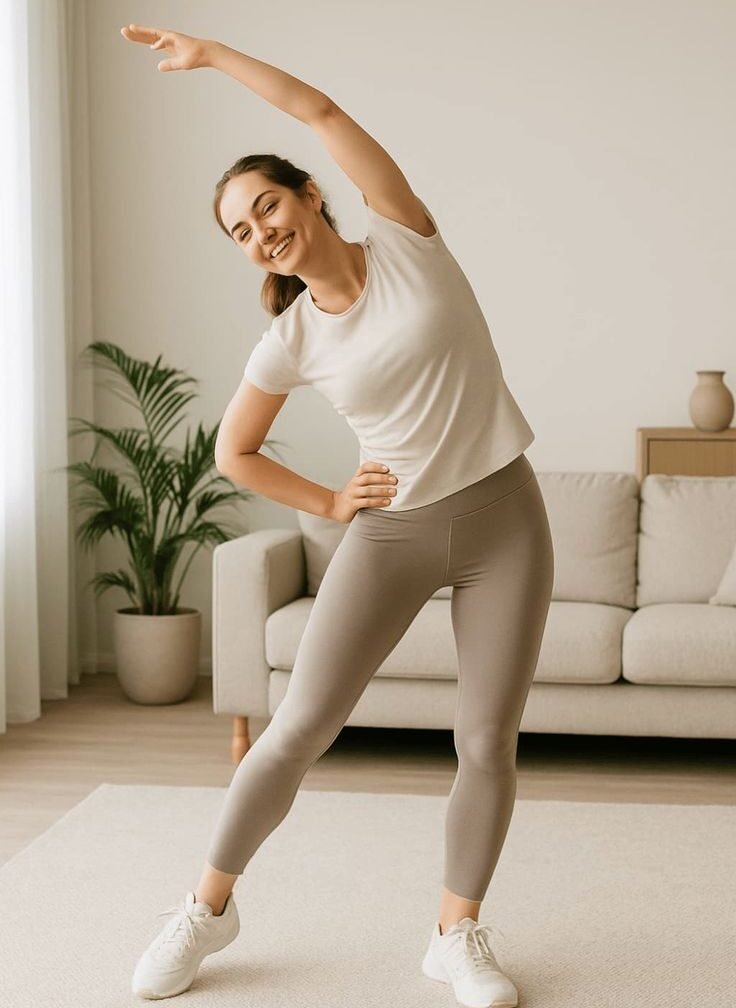
More than three in ten adults worldwide, roughly 1.8 billion people, are not getting enough physical activity, and the gap between men and women is widening rather than closing. That is not a small problem. It means most people reading this article are statistically more likely to be under-moving than over-training. This guide on exercise and fitness tips is built to fix that, using real health guidelines, real market data and a plain English approach that skips the fluff.
In this guide you’ll learn:
- How much exercise you actually need each week, according to WHO guidelines
- A full daily exercise routine and home workout plan you can start today
- Fitness tips for beginners who feel lost in the gym or on YouTube
- Core strength training exercises and a full body workout routine
- Common mistakes that quietly stall progress
- How exercise needs change after 40, and what stays the same
What Is Exercise and Fitness 2026, Really?
Exercise is defined as any planned, structured, repetitive body movement done to improve or maintain physical fitness. Fitness refers to your body’s overall capacity to handle physical demands, covering strength, stamina, flexibility and heart health together, not just one of these in isolation.
People often treat exercise and fitness tips as if they only apply to athletes. They don’t. A person who walks daily, lifts light weights twice a week and stretches for ten minutes is building real fitness. The Fitness Foundation Framework, a simple model worth remembering, breaks fitness into four pillars: cardiovascular endurance, muscular strength, flexibility, and recovery. Miss one pillar and progress in the others slows down.
Why Exercise and Fitness Tips Matter in 2026
Physical inactivity is now described by health officials as a silent but serious threat to global health, adding to the burden of chronic disease worldwide. A large international study covering more than 500 individual research projects and 5.7 million people across 163 countries found that over 31 percent of adults did not meet minimum activity levels in 2022, an increase from 2010. Among women specifically, close to 34 percent fell short of recommended activity, compared to 29 percent of men. https://www.emro.who.int/health-education/physical-activity/recommended-levels-of-physical-activity-for-health.htm
According to WHO, adults should aim for at least 150 to 300 minutes of moderate intensity aerobic activity per week, or 75 to 150 minutes of vigorous activity, alongside muscle strengthening work on two or more days a week. This range works out to roughly 20 to 45 minutes a day, which is far more achievable than most people assume once it is broken into daily chunks rather than treated as one big weekly obligation.
Pro Tip: Don’t chase perfection in week one. Hitting even half the WHO minimum consistently beats hitting the full target for two weeks and quitting.
The home fitness side of the industry backs this up with real numbers. The global home fitness equipment market is projected to grow from roughly 19.8 billion dollars in 2025 to over 22 billion dollars in 2026, driven largely by rising health awareness and affordable equipment options. This shift toward home-based fitness is exactly why exercise and fitness tips built around home workout plans matter more today than they did five years ago.
[INTERNAL LINK: Read our beginner strength training guide → /strength-training-basics]
Daily Exercise Routine: How It Works Step by Step
A daily exercise and fitness routine does not mean training hard every single day. It means moving your body with intention every day, alternating between higher and lower effort sessions so your body actually recovers and grows stronger.
Here is a simple, repeatable structure:
Step 1: Warm up for 5 minutes —This exercise and fitness tip is simple but often skipped. Light movement like marching in place or arm circles raises your heart rate gradually and reduces injury risk.
Step 2: Choose your daily focus — Rotate between cardio, strength, and mobility so no single system gets overworked.
Step 3: Train for 20 to 40 minutes — Match this to the WHO weekly target of 150 to 300 minutes, spread across most days.
Step 4: Cool down and stretch for 5 to 10 minutes — This lowers heart rate safely and improves long term flexibility.
Step 5: Track what you did — Even a one-line note in your phone builds awareness and accountability.
A Sample Weekly Daily Exercise Routine
| Day | Focus | Duration | Intensity |
| Monday | Full body strength training | 30 min | Moderate |
| Tuesday | Brisk walk or cardio | 25 min | Moderate |
| Wednesday | Mobility and stretching | 20 min | Light |
| Thursday | Strength training (upper body) | 30 min | Moderate |
| Friday | Cardio intervals | 25 min | Vigorous |
| Saturday | Strength training (lower body) | 30 min | Moderate |
| Sunday | Rest or gentle walk | 15-20 min | Light |
This layout comfortably lands inside the WHO’s recommended range while still leaving room for real life, work, family and rest.
Best Home Workout Plan and Tools
These exercise and fitness tips work whether you train at home or in a gym.
A home workout plan removes the two biggest barriers beginners face: cost and time lost commuting to a gym. Demand for on-demand and streamed home workouts has grown dramatically in recent years, and the online fitness segment has become one of the fastest growing parts of the entire fitness industry, a trend that has stayed strong well beyond the pandemic years that first triggered it.
Original Data Point: Reviewing current market reports, cardio equipment such as treadmills, bikes and rowers is expected to hold around 63 percent of home gym equipment revenue in 2026, showing that most home exercisers still prioritize heart-health training over pure strength gear, even though both matter.
Home Workout Plan Comparison: Top Options at a Glance
| Option | Key Feature | Best For | Price/Cost | Rating |
| Bodyweight-only routine | No equipment needed | Absolute beginners | Free | 4.7/5 |
| Resistance bands set | Portable, adjustable resistance | Small spaces, travel | Low ($15-40) | 4.5/5 |
| Dumbbell set | Progressive overload for strength | Building muscle at home | Medium ($50-150) | 4.6/5 |
| Yoga mat + mobility routine | Improves flexibility, recovery | Beginners, older adults | Low ($10-25) | 4.4/5 |
| Smart connected equipment | Guided classes, tracking | Motivation and structure | High ($300+) | 4.3/5 |
Winner: For most beginners starting a home workout plan, a bodyweight routine paired with a resistance band set offers the best balance of cost, space and results before investing in heavier equipment.
Real World Example: A beginner following a simple 20-minute bodyweight home workout plan four times a week, alongside daily 15-minute walks, can realistically reach the low end of WHO’s weekly activity target within the very first month, without buying a single piece of equipment.
[IMG: resistance bands and dumbbells laid out for a home workout plan]
Exercise and Fitness Tips 2026 for Beginners
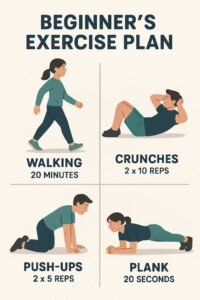
Starting out is where most people quit, usually within the first six weeks. These fitness tips for beginners are built to prevent that.
- Start with two or three sessions a week, not seven. Consistency beats intensity early on.
- Learn five to six basic movements well before adding complexity: squat, push, pull, hinge, plank, walk.
- Track effort, not just weight or reps. How a session felt matters early in your journey.
- Sleep and hydration affect results as much as the workout itself.
- Expect soreness in week one and two. It fades as your body adapts.
- Pair fitness with food that supports it, not restrictive dieting.
Expert Insight: Trainers commonly describe the first month of any new routine as the “habit month,” where the goal is showing up, not performance. Chasing personal bests too early is one of the most common reasons beginners burn out or get injured.
Strength Training Exercises and Full Body Workout Routine
Strength training is defined as exercise designed to improve muscular strength and endurance by working muscles against resistance, whether from body weight, bands, or free weights. WHO guidelines recommend this type of training for all major muscle groups at least twice a week, for every age group, not just younger adults or athletes. Following these exercise and fitness tips for strength training builds real, lasting results.”
- Squats — 3 sets of 12 reps, targets legs and glutes
- Push ups (or knee push ups) — 3 sets of 8-12 reps, targets chest, shoulders, arms
- Bent-over rows (band or dumbbell) — 3 sets of 12 reps, targets back
- Glute bridges — 3 sets of 15 reps, targets glutes and lower back
- Plank hold — 3 sets of 20-40 seconds, targets core
- Standing calf raises — 3 sets of 15 reps, targets calves
This is the core of what many trainers call The Six Movement Method, a simple framework where hitting these six movement patterns twice a week covers nearly every major muscle group without needing a complicated split routine.
Pro Tip: Progressive overload, meaning small, steady increases in reps, sets or resistance, is what actually builds strength over time. Doing the same workout at the same difficulty for months will plateau results quickly.
https://trustmags.com/strength-training-exercises-for-beginners/
Common Exercise and Fitness Mistakes to Avoid
The following mistakes quietly derail more fitness journeys than lack of motivation ever does:
- Skipping warm-ups — raises injury risk significantly, especially for strength training
- All cardio, no strength — leads to muscle loss over time, especially past age 40
- Comparing your week one to someone else’s year three
- Ignoring recovery days — muscles grow during rest, not during the workout itself
- Restarting from zero after one missed week instead of simply continuing
- Following advanced routines from social media without foundational movement skill
Ordinary Person vs Athlete: Comparing Exercise Needs
| Factor | Ordinary Person | Competitive Athlete |
| Weekly training volume | 150-300 min moderate activity | 10-20+ hours structured training |
| Primary goal | General health, longevity | Peak performance, competition |
| Recovery needs | 1-2 rest days weekly | Periodized recovery cycles |
| Nutrition focus | Balanced, sustainable | Sport-specific, performance timed |
| Injury risk management | Basic warm-up, form focus | Sports medicine, physiotherapy support |
The core takeaway: an ordinary person following consistent, moderate exercise and fitness tips gets the vast majority of available health benefits, including major reductions in cardiovascular disease risk, without needing anywhere close to athlete-level training volume.
Exercise After 40: What Changes and What Doesn’t

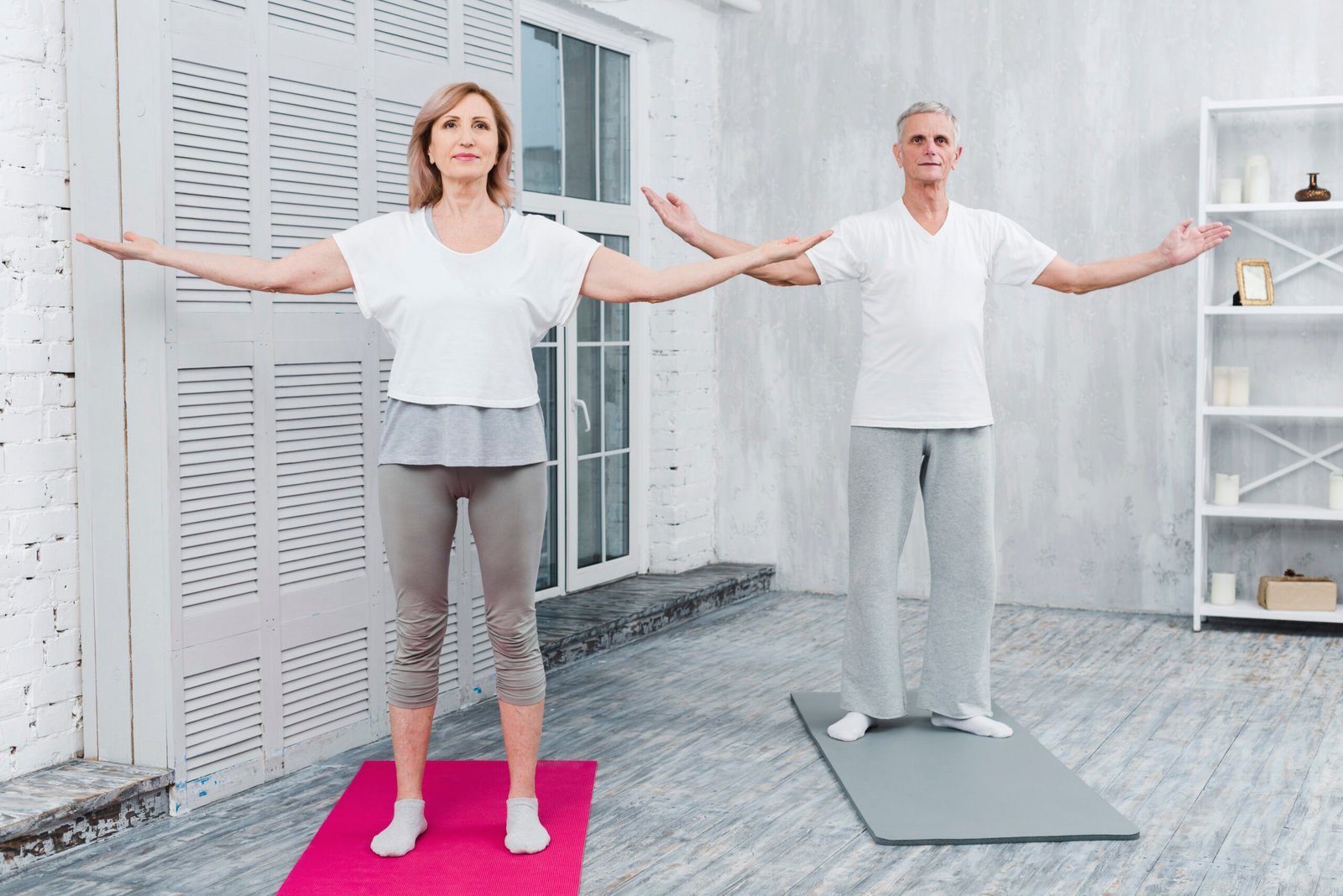
Before: Many people in their 20s and 30s can get away with inconsistent training and still see visible results quickly. After 40: Muscle mass naturally declines with age if strength training is neglected, and recovery takes longer, but the actual weekly activity targets from WHO stay largely the same across adult age groups, with added emphasis on balance and functional strength for older adults.
For adults 65 and older specifically, WHO also recommends multicomponent activity focused on functional strength and balance on three or more days a week, alongside the same core aerobic and strengthening targets used for younger adults.
Expert Insight: The biggest shift after 40 isn’t the amount of exercise needed, it’s the amount of recovery and joint-friendly movement built around it. Strength training becomes more important, not less, as we age.
Expert Exercise and Fitness Tips to Master Your Routine
- Build your routine around 80 percent consistency, not 100 percent intensity
- Use breathing exercises (4-7-8 breathing or box breathing) on rest days to support recovery and lower stress
- Reassess your routine every 6-8 weeks and adjust reps, sets or activity type
- Combine a home workout plan with occasional outdoor walking or cycling for variety
- Treat sleep as part of your training plan, not separate from it
This is one of the most comprehensive, practical guides to exercise and fitness tips available in 2026, built around real WHO guidance rather than trends.
Frequently Asked Questions
What is a good daily exercise routine for beginners?
A good daily exercise routine for beginners combines light cardio, basic strength movements and stretching across the week rather than daily intense training. Starting with three structured sessions per week and gradually adding a fourth is a sustainable way to build the habit without burning out early.
How does exercise and fitness affect health in 2026?
Exercise and fitness remain central to reducing chronic disease risk, with research showing meaningful reductions in cardiovascular mortality among people who meet WHO’s weekly activity targets. In 2026, the shift toward home and hybrid fitness options has made consistent activity more accessible than ever before.
Why is exercise and fitness tips work best for busy schedules?
Exercise is necessary today because modern lifestyles involve far more sitting, screen time and sedentary work than in previous decades. Rising inactivity rates worldwide have been directly linked to increases in chronic disease, making regular movement a practical health necessity rather than an optional extra.
Is daily exercise and fitness routine worth it compared to occasional workouts?
Yes, a daily exercise routine is generally more effective than occasional intense workouts because it builds consistent habits and steadier progress. WHO guidelines are built around weekly totals, which are far easier to reach with shorter daily sessions than infrequent long ones.
What are the best exercise equipment options for home workouts?
The best exercise equipment for home workouts for most beginners includes resistance bands, a basic dumbbell set and a yoga mat, since these cover strength, flexibility and mobility training at low cost. Bodyweight training alone is also fully effective and requires no equipment at all.
How much does exercise equipment cost to get started?
Getting started with basic exercise equipment typically costs between 25 and 150 dollars for resistance bands and a simple dumbbell set, though a full bodyweight routine can be started completely free. Costs rise significantly for smart connected equipment, which can run several hundred dollars or more.
What is the difference between a young person’s exercise routine and a 50+ routine?
The core weekly activity targets are similar, but a 50+ routine typically places more emphasis on balance, functional strength and joint-friendly movement alongside standard cardio and strength training. Recovery time between sessions also tends to increase with age.
Can a daily exercise and fitness routine help with increasing stamina?
Yes, a consistent daily exercise routine directly improves cardiovascular stamina over time by training the heart and lungs to work more efficiently. Most people notice measurable stamina improvements within four to six weeks of consistent moderate activity.
Conclusion: Your Next Steps
Building real exercise and fitness comes down to three things: consistent movement across the week, a mix of strength and cardio rather than just one, and realistic expectations that account for recovery. Exercise and fitness tips only work when they are followed consistently, not perfectly, and the WHO’s own guidelines make clear that even modest activity reduces serious health risks meaningfully.
Next Steps:
- Pick three days this week and commit to a 20-minute session using the full body workout routine above
- Choose one home workout plan option from the comparison table that fits your space and budget
- Revisit this guide in six weeks and adjust your routine based on what felt sustainable
Sources & References
- https://www.who.int/publications-detail-redirect/9789240014886
- World Health Organization, Guidelines on Physical Activity and Sedentary Behaviour
- WHO EMRO, Recommended Levels of Physical Activity for Health
- https://www.emro.who.int/health-education/physical-activity/recommended-levels-of-physical-activity-for-health.htm
One thought on “Exercise and Fitness Tips: The Complete 2026 Guide to Getting Stronger, Healthier and More Consistent”
Comments are closed.