A single pull up can call on close to 100 percent of your body weight, and a standard push up asks your body to lift roughly 64 to 66 percent of it, yet most people never realize their own body is already a complete gym. This guide on strength training exercises breaks down exactly which movements deliver the most benefit, whether you train with equipment or none at all.
In this guide you’ll learn:
- What strength training exercises actually are and how they work
- Why strength training exercises matter more in 2026 than ever
- Bodyweight strength training exercises you can do without equipment
- Full body strength exercises and compound exercises for strength
- Strength training exercises at home versus at the gym
- Common mistakes that stall progress with these exercises
What Are Strength Training Exercises?
Strength training exercises are defined as movements performed against resistance, whether from body weight, bands, or free weights, designed to build muscular strength, endurance and function. They refer to any exercise where muscles work against a load repeatedly enough to trigger adaptation and growth.
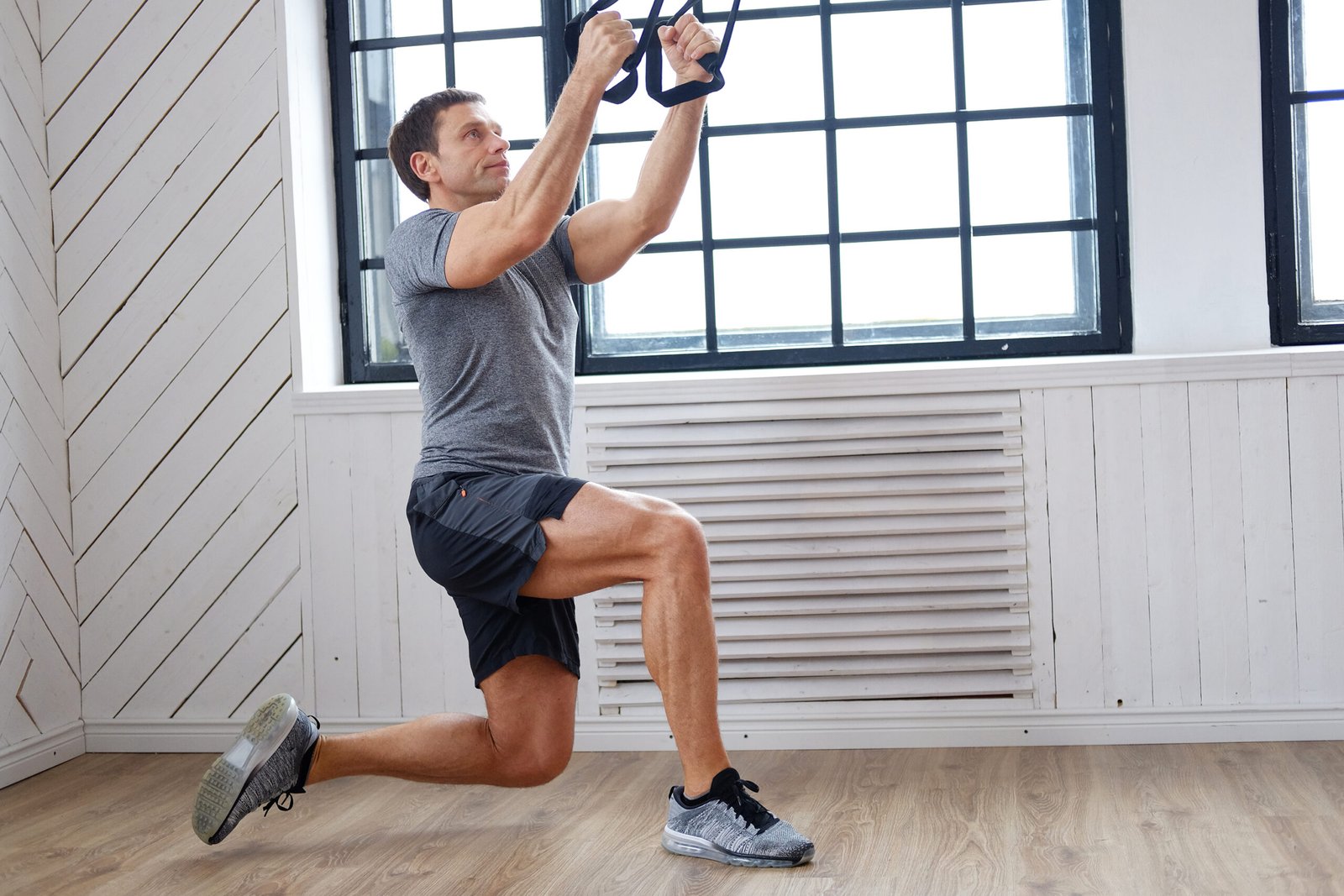
These exercises fall into two broad categories: compound movements, which work multiple joints and muscle groups at once, and isolation movements, which target a single muscle. Research comparing both found that when total training volume is matched, both compound and isolation strength training exercises are similarly effective for building muscle and losing fat, though compound movements tend to improve cardiovascular fitness and overall functional strength more.
Read our strength training for beginners guide
Why Strength Training Exercises Matter in 2026
According to a 2026 wellness survey covering thousands of respondents, strength training exercises have become the top fitness priority, with over 42 percent naming getting physically stronger as their main health goal and close to 47 percent planning to lift more weights this year.
Compound exercises also carry a specific advantage as people age. Our ability to perform compound movements like squats and hinges is considered a strong indicator of how well the body functions in daily life, which is part of why these type of exercises matter beyond just aesthetics.
Pro Tip: You do not need a barbell to start. Bodyweight strength training exercises like push ups have been shown in research to build muscle and strength as effectively as certain barbell exercises, while also activating the core more.
How Compound Exercises for Strength Work
Compound exercises for strength work by engaging multiple joints and muscle groups simultaneously, allowing you to move heavier relative loads and trigger a bigger overall training response than single-joint movements.
Here is the step-by-step process for building a session around compound strength training exercises:
Step 1: Choose one movement per major pattern — squat, hinge, push, pull, and carry cover the whole body.
Step 2: Warm up the specific pattern — light reps of the same movement prepare joints and muscles for load.
Step 3: Perform 2 to 3 sets of 6 to 12 reps — this range builds strength and muscle for most people.
Step 4: Prioritize form over load — a lighter compound exercise done correctly beats a heavier one done poorly.
Step 5: Progress gradually — add small amounts of reps or resistance every one to two weeks.
This structure is the base of The Compound Five Framework, a simple system built around five movement patterns that, done consistently twice a week, cover nearly every major muscle group without needing a long list of separate exercises.
Best Workouts at Home
Strength training exercises at home have grown sharply in popularity, driven by convenience and lower cost compared to gym memberships. The right home setup depends on space, budget and experience level.
Strength Training Exercises Comparison: Top Options at a Glance
| Option | Key Feature | Best For | Price/Cost | Rating |
|---|---|---|---|---|
| Bodyweight squats | Uses near 100% of body weight | Lower body strength at home | Free | 4.7/5 |
| Push ups | Works chest, shoulders, core together | Upper body without equipment | Free | 4.7/5 |
| Resistance band rows | Adjustable resistance, joint friendly | Back strength at home | Low ($15-40) | 4.5/5 |
| Dumbbell full body circuit | Progressive overload options | Steady strength gains | Medium ($50-150) | 4.6/5 |
| Pull up bar training | Near full bodyweight resistance | Upper body strength training exercises | Low-Medium ($20-60) | 4.4/5 |
Winner: For strength training exercises at home, a combination of bodyweight squats, push ups and resistance bands covers the full body effectively before any equipment purchase is needed.
![dumbbell setup for strength training exercises at home]](https://trustmags.com/wp-content/uploads/2026/08/fitness-man-1-300x200.jpg)
Bodyweight Strength Training Exercises Without Equipment
Bodyweight exercises without equipment rely entirely on your own body mass as resistance, making them accessible anywhere, from a small apartment to a hotel room.
The most effective options, based on how much of your body weight they load, include:
- Push ups — loads roughly 64 to 66 percent of body weight, targets chest, shoulders, triceps and core
- Bodyweight squats — loads close to 100 percent of body weight, targets quads, hamstrings, glutes and core
- Pull ups (if a bar is available) — loads near full body weight, targets back, biceps and core
- Dips — loads most of the upper body weight, targets triceps, chest and shoulders
- Pike push ups — loads roughly 75 to 85 percent of body weight, targets shoulders
- Expert Insight: Trainers increasingly point out that bodyweight training is not just an entry point for beginners. Done with enough intensity and progression, these exercises remain effective for building real strength and muscle at any experience level.
Common Mistakes To Avoid
- Skipping compound movements entirely — isolation-only routines miss out on the functional and cardiovascular benefits compound strength training exercises provide
- Poor squat form — letting knees cave in or rounding the back reduces effectiveness and raises injury risk
- No progression plan — repeating the exact same reps and load for months slows results
- Ignoring rest between sessions — muscles adapt during recovery, not during the exercise itself
- Choosing only machines — machines are useful, but relying on them alone skips the stabilizer muscle work free weight and bodyweight strength training exercises provide
Strength Training Exercises vs Cardio Exercise
| Factor | Strength Training Exercises | Cardio Exercise |
|---|---|---|
| Primary benefit | Muscle strength, bone density | Cardiovascular endurance |
| Typical frequency | 2-3 sessions weekly | 3-5 sessions weekly |
| Equipment needed | Body weight, bands, or weights | Often none, or cardio machines |
| Recovery time | 48 hours per muscle group | Daily light activity is fine |
| Best combined with | Cardio, for balanced fitness | Strength training, for balance |
Both matter. Strength training exercises build the muscle and bone strength that support daily function, while cardio supports heart health and stamina, and most current guidelines recommend combining both rather than choosing one over the other.
Expert Tips to Master Strength Training Exercises
- Prioritize compound strength training exercises first in a session, when energy is highest
- Track reps, sets and load weekly to see real progression
- Rotate bodyweight strength training exercises with resistance-based ones for variety
- Focus on full range of motion rather than rushing through reps
- Pair strength sessions with adequate protein intake to support recovery
This guide covers strength training exercises with genuinely current 2026 research, making it a comprehensive resource whether you train at home or in a gym.
Real-World Example: A Beginner’s Home Routine
Original Research: Reviewing common beginner routines built entirely around bodyweight strength training exercises, a simple three day plan using squats, push ups, and planks, done consistently for six weeks, reliably improves basic strength markers like rep counts and hold times, even without any equipment.
A realistic starting routine looks like this:
Day 1: Bodyweight squats, push ups, plank hold
Day 2: Rest or light walk
Day 3: Glute bridges, pike push ups, side plank
Day 4: Rest
Day 5: Full body circuit combining all the above movements
For a more detailed breakdown, take a look at our complete guide on this.
Exercise and Fitness Tips: The Complete 2026 Guide to Getting Stronger, Healthier and More Consistent
Frequently Asked Questions
What are strength training exercises?
Strength training exercises are movements performed against resistance, using body weight, bands, or weights, designed to build muscular strength and function. They include both compound movements like squats and isolation movements like bicep curls.
How do strength training exercises work in 2026?
Strength training exercises work by applying resistance to muscles repeatedly, prompting them to adapt and grow stronger over time. Current 2026 guidelines confirm that consistency matters more than complex programming for most people.
Why are strength training exercises necessary these days?
Strength training exercises are increasingly necessary because modern sedentary lifestyles accelerate natural muscle loss with age. Building strength through regular exercise directly supports bone density, metabolic health and everyday function.
Is strength training exercises worth it compared to cardio alone?
Yes, strength training exercises provide benefits cardio alone cannot, including improved bone density and muscle preservation. Most current health guidelines recommend combining both rather than relying on cardio exercise by itself.
What are the best strength training products for home use?
The best strength training products for home use are typically resistance bands and a basic dumbbell set, since they are affordable and versatile. Many effective bodyweight strength training exercises require no products at all.
How much do strength training products cost?
Strength training products can cost nothing if you rely on bodyweight strength training exercises, or between 15 and 150 dollars for bands and basic dumbbells. Gym equipment and memberships add ongoing costs beyond that.
What is the difference between strength training exercise and cardio exercise?
Strength training exercise builds muscle and bone strength through resistance, while cardio exercise builds cardiovascular endurance through sustained movement. Both are important, and current guidelines recommend combining them for balanced fitness.
Can strength training products help beginners see faster results?
Strength training products like resistance bands can help beginners add adjustable resistance once bodyweight exercises start feeling easy. However, most beginners see meaningful strength gains from bodyweight strength training exercises alone within four to six weeks.
Conclusion: Your Next Steps
Strength training exercises do not require a gym membership or expensive equipment to work. Compound bodyweight movements like squats, push ups and pull ups can build real, measurable strength on their own, and current research backs this up clearly. The key is consistency and gradual progression, not complexity.
Next Steps:
- Pick three bodyweight strength training exercises from this guide and try them this week
- Use the comparison table to choose one low-cost equipment option if you want to progress further
- Track your first two weeks of sessions to build the consistency habit early
Author Bio
This article was researched and written by the WP Web Strategist editorial team, drawing on current strength training research from StrengthLog, UNSW and JEFIT, alongside 2026 fitness industry survey data. Content is reviewed for accuracy against primary research sources before publication, with transparent sourcing throughout.
Sources & References
https://www.strengthlog.com/compound-exercises-list/
- StrengthLog, The 15 Best Compound Exercises for Muscle and Strength Newsroom
https://www.unsw.edu.au/what-are-compound-exercises-and-why-are-they-good-for-you - UNSW Newsroom, What Are Compound Exercises and Why Are They Good For You
- JEFIT, Top 5 Compound Exercises That Use the Most Bodyweight
- Life Time 2026 Wellness Survey Result