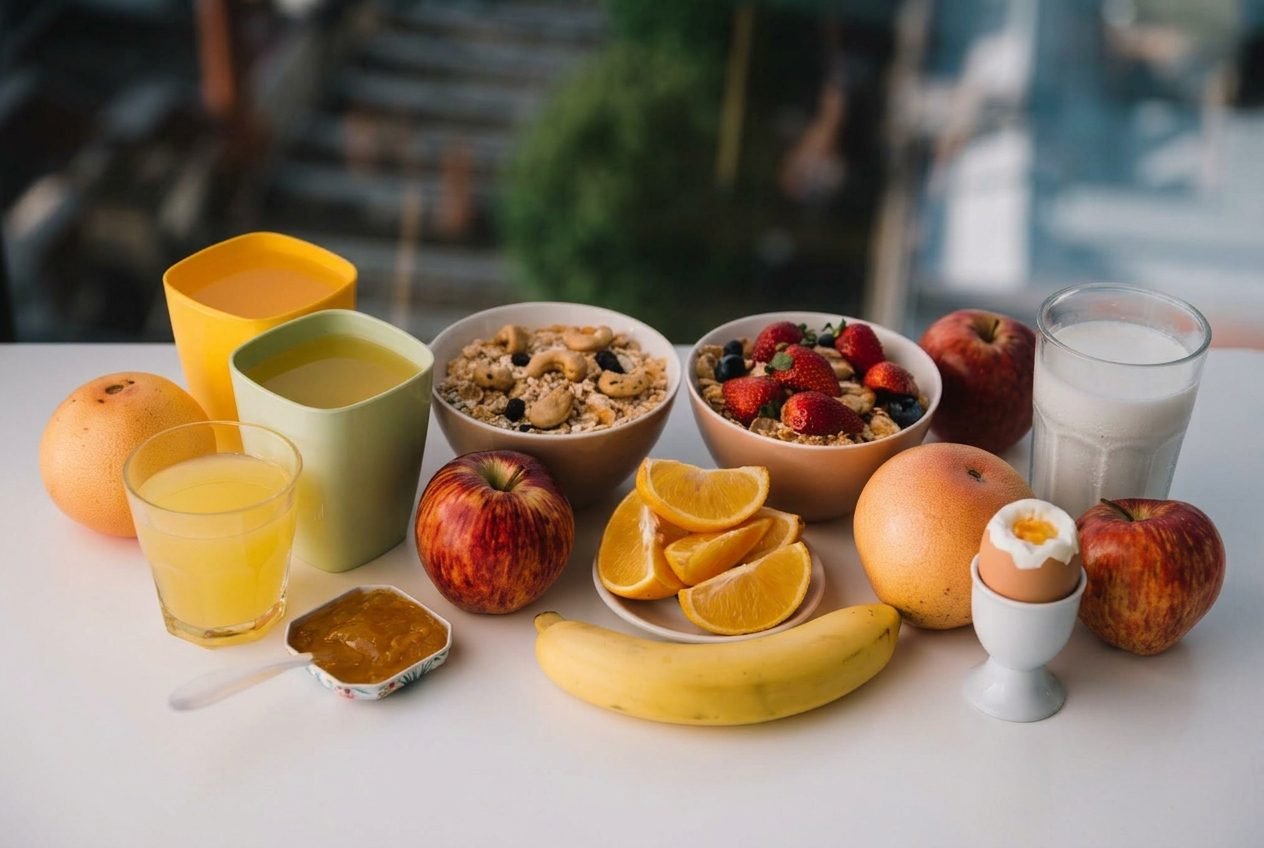
The best breakfast foods for energy do more than quiet a growling stomach. They keep your focus steady until lunch, without the mid-morning slump that sends you looking for a second coffee. Yet many popular American breakfasts, such as cereal, bagels, muffins, and sweet coffee drinks, are mostly refined carbohydrates. They digest fast, so energy climbs quickly and then drops.
This guide shows you how to build an energy breakfast that lasts. You will get 12 foods that work, a simple three-number check for any plate, practical ways to reach 30 grams of protein, and swaps for busy, budget, and plant-based mornings. You will also learn what to eat the night before so tomorrow feels easier.
The advice here is general education based on Harvard Health Publishing and the 2025 to 2030 Dietary Guidelines for Americans. It is not medical advice.
Key Takeaways
✓ Pair protein, fiber-rich carbs, and healthy fats at breakfast for steadier energy.
✓ Use the 20-5-10 Energy Check: 20g protein, 5g fiber, and 10g or less added sugar.
✓ Eggs, Greek yogurt, oats, chia seeds, berries, and lentils are reliable breakfast foods for energy.
✓ Sugary cereal, pastries, and juice alone are the most common causes of a mid-morning crash.
✓ Prepping a few ingredients the night before makes a strong breakfast the easy choice.
What Makes Breakfast Foods for Energy Work?
Breakfast foods for energy are morning foods that release fuel slowly and steadily. They usually combine protein, fiber-rich carbohydrates, and healthy fats, so blood sugar stays level and hunger stays quiet for several hours.
Why Morning Blood Sugar Matters
Harvard Health Publishing explains that after several hours without food, your blood sugar sits at its daily low point and your energy stores need replenishing. What you eat next shapes the rest of the morning.
A fast-digesting breakfast, such as a plain bagel, sends blood sugar up quickly. Your body then responds, and many people feel tired and hungry again within a couple of hours. A slower-digesting breakfast avoids that rollercoaster.
The Protein, Fiber, and Fat Trio
Each nutrient has a job. Protein adds staying power and supports muscle. Fiber slows digestion, so carbohydrates enter your bloodstream gradually. Healthy fats from foods like nuts, seeds, and avocado make a meal more filling.
The 2025 to 2030 Dietary Guidelines for Americans, available at realfood.gov, tell people to prioritize protein foods at every meal. They also recommend fiber-rich whole grains and fewer highly processed foods.
Want to go further with this topic? Our complete guide to the best everyday options is a good next stop.
https://trustmags.com/foods-that-give-you-energy/
What is the best breakfast foods to get full energy? The best choice combines protein, fiber, and a little healthy fat. Examples include eggs with whole-grain toast and avocado, or Greek yogurt with berries and nuts.
[IMG: Plate of breakfast foods for energy with eggs, avocado, whole-grain toast, and berries | Place after this section, as a wide hero-style photo]
The 20-5-10 Energy Check
Most breakfast advice stays vague. “Eat healthy” does not help when you stand in front of an open fridge at 7:15 a.m. So this guide uses a simple editorial framework called the 20-5-10 Energy Check. It is a practical rule of thumb created for this article, not an official medical standard.
How the Three Numbers Work
→ 20 grams of protein or more. This gives the meal staying power. Many people land between 20 and 30 grams with two or three protein foods.
→ 5 grams of fiber or more. Harvard Health uses 5 grams per serving as a benchmark when it advises choosing breakfast cereal. Oats, berries, chia seeds, beans, and whole grains get you there.
→ 10 grams of added sugar or less. The 2025 to 2030 Dietary Guidelines say one meal should contain no more than 10 grams of added sugars.
If a breakfast hits all three, it is very likely to keep you full. If it misses two, expect a crash.
Checking Your Own Plate in 30 Seconds
Look at the labels on your usual foods. Add up protein and fiber, then check the “Added Sugars” line. For whole foods like eggs or fruit, the USDA FoodData Central database lists nutrient values you can look up.
Pro Tip: Fix the weakest number first. Most people already get enough carbohydrate at breakfast. Protein and fiber are usually the missing pieces, so start by adding one egg, a spoonful of chia seeds, or a handful of berries.
12 Best Breakfast Foods For Energy That Keep You Full
What are 10 good breakfast foods? Eggs, Greek yogurt, oatmeal, cottage cheese, chia seeds, berries, avocado, nuts, whole-grain toast, and lentils are ten strong options. This list adds tofu scramble and bananas, so you get 12 breakfast foods that keep you full.
1. Eggs
One large egg has about 6 grams of protein, according to USDA data. Two eggs get you near 12 grams before you add anything else. Scramble them with spinach or boil a batch for the week.
2. Greek Yogurt
Plain Greek yogurt packs more protein than regular yogurt, a point Harvard Health makes in its advice on energy-boosting breakfasts. Choose plain and sweeten it with fruit, so you control the added sugar.
3. Oatmeal
Oats are a whole grain with soluble fiber, which slows digestion. Steel-cut oats digest more slowly than instant packets. Stir in nut butter or Greek yogurt to raise the protein.
4. Cottage Cheese
Half a cup typically provides roughly 12 to 14 grams of protein. It works with fruit for a sweet bowl or with tomatoes and pepper for a savory one.
5. Chia Seeds
Two tablespoons add about 10 grams of fiber and some protein. Soak them in milk overnight and you have pudding that needs no cooking.
6. Berries
Berries bring fiber and natural sweetness with fewer sugars than many fruits. Raspberries are especially high in fiber. Frozen berries cost less and work perfectly in oats or yogurt.
7. Avocado
Half an avocado adds roughly 5 grams of fiber plus healthy fats. Mash it on toast or slice it next to eggs.
8. Nuts and Nut Butter
Almonds, walnuts, and peanut butter add protein, fat, and crunch. A small handful is enough. Choose nut butters with no added sugar.
9. Sprouted or Whole-Grain Toast
Look for whole grain as the first ingredient. Toast works as a base for eggs, avocado, or nut butter rather than as a meal by itself.
10. Lentils and Beans
A cup of cooked lentils delivers about 18 grams of protein and 15 grams of fiber, based on USDA data. Warm them with a fried egg or spoon them into a breakfast burrito.
11. Tofu Scramble
Crumbled firm tofu with turmeric, peppers, and onion gives a plant-based protein hit in about 10 minutes. It suits vegan mornings and pairs well with whole-grain toast.
12. Bananas
A banana alone is mostly carbohydrate, so pair it with peanut butter or yogurt. The combination gives quick fuel plus staying power, which makes it a useful pre-workout breakfast.
Quick Comparison Table
| Food (typical serving) | Protein | Fiber | Prep time | Best role |
|---|---|---|---|---|
| Eggs (2 large) | ~12 g | 0 g | 5 to 10 min | Protein anchor |
| Greek yogurt, plain (¾ cup) | ~15 to 17 g | 0 g | 1 min | Fast protein |
| Rolled oats (½ cup dry) | ~5 g | ~4 g | 5 min | Slow carbs |
| Cottage cheese (½ cup) | ~12 to 14 g | 0 g | 1 min | Sweet or savory protein |
| Lentils (1 cup cooked) | ~18 g | ~15 g | 2 min if pre-cooked | Plant protein and fiber |
| Chia seeds (2 tbsp) | ~5 g | ~10 g | Overnight soak | Fiber boost |
| Avocado (½ medium) | ~2 g | ~5 g | 2 min | Healthy fats |
| Almonds (1 oz) | ~6 g | ~3.5 g | 0 min | Portable crunch |
Values are approximate and vary by brand. Check labels or USDA FoodData Central for exact numbers.
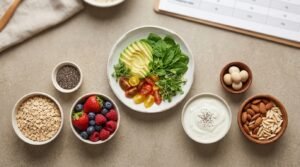
High Protein Breakfast for Energy: Reaching 30g
A high-protein breakfast helps many people stay full longer. Because the Dietary Guidelines ask people to prioritize protein at every meal, breakfast is a natural place to start.
How to Get 30g of Protein in the Morning?
You get 30 grams of protein by combining two or three protein foods rather than relying on one. Follow these steps:
- Start with an anchor. Choose eggs, Greek yogurt, or cottage cheese for 12 to 17 grams.
- Add a second protein. Include a handful of nuts, a spoonful of nut butter, or a slice of whole-grain bread with seeds for 5 to 8 more grams.
- Add a plant booster. Beans, lentils, chia seeds, or tofu bring more protein plus fiber.
- Finish with produce. Berries, spinach, tomatoes, or peppers add volume and nutrients.
- Check the sugar. Keep added sugar at 10 grams or less by choosing plain yogurt and unsweetened nut butter.
Three Plates That Reach About 30g
→ Egg plate: two eggs, ½ cup black beans, salsa, and whole-grain toast.
→ Yogurt bowl: ¾ cup plain Greek yogurt, 2 tablespoons chia seeds, almonds, and berries.
→ Plant-based plate: tofu scramble, ½ cup lentils, and sliced avocado.
Protein needs vary with body size, age, and health. If you manage a medical condition, ask a qualified professional what amount suits you.
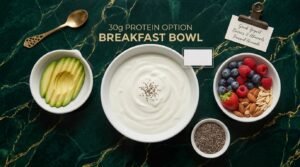
Breakfast Foods That Prevent Energy Crashes
Why do some breakfasts cause a crash? They deliver fast carbohydrates without enough protein or fiber. Blood sugar rises quickly, then falls, and fatigue and hunger follow. The fix is usually a swap, not a bigger meal.
Swaps That Keep Energy Steady
| Common choice | Why it fades | Steadier swap |
|---|---|---|
| Sweetened cereal with milk | Refined carbs, low protein | Oats with Greek yogurt and berries |
| Bagel with cream cheese | Mostly refined flour | Whole-grain toast with eggs and avocado |
| Muffin or pastry | Added sugar plus refined flour | Cottage cheese with fruit and nuts |
| Flavored yogurt cup | Often high in added sugar | Plain Greek yogurt with berries |
| Fruit juice alone | Sugar with little fiber or protein | Whole fruit plus a handful of nuts |
Harvard physician Monique Tello has made a similar point, noting that many typical American breakfasts lack protein and fiber and act more like dessert.
How to Pair Coffee Without Crashing
Coffee gives alertness, but food gives fuel. Drink it with a real breakfast rather than in place of one. If your coffee drink is sweet, count its sugar toward your 10 gram limit.
A Realistic Example (Hypothetical)
This scenario is hypothetical and meant only to show how the framework works.
Imagine Maya, an office worker who eats a blueberry muffin and a sweet latte at 8 a.m. By 10:30 she feels foggy and hungry. The next week she tries two eggs, whole-grain toast, and a banana with her coffee. The meal has more protein and fiber and less added sugar. She may notice steadier energy, though results differ from person to person.
Persistent tiredness has many possible causes, and food is only one. If your fatigue does not improve, our guide may help you sort through the common reasons.
https://trustmags.com/why-am-i-so-tired/
What to Eat at Night for Morning Energy
What to eat at night for energy in the morning? Choose a balanced dinner with protein, vegetables, and whole grains or beans. Then prep your breakfast ingredients before bed. Your evening plate influences how you feel, but a ready-made breakfast helps you follow through.
Night-Before Prep Ideas
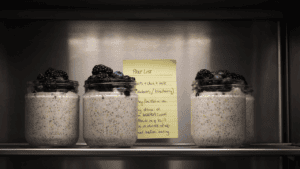
→ Overnight oats: combine oats, milk, chia seeds, and berries in a jar.
→ Chia pudding: soak chia seeds in milk and top with fruit in the morning.
→ Boiled eggs: cook a batch and keep them in the fridge for up to a week.
→ Egg muffin cups: bake eggs with vegetables, then reheat as needed.
What Are Healthy Energy Snacks?
Healthy energy snacks follow the same rule as breakfast: protein plus fiber. Good options include an apple with peanut butter, plain yogurt with berries, a boiled egg with whole-grain crackers, or a small handful of nuts.
Feeling sluggish after meals? That can point to the meal’s makeup. Our guide explains what may be going on.
https://trustmags.com/tired-after-eating/
Healthy Breakfast Ideas for Real Life Mornings
Good nutrition has to fit your schedule and budget. These healthy breakfast ideas work when time or money is tight.
The 5-Minute Energy Breakfast
→ Greek yogurt, berries, and almonds
→ Peanut butter on whole-grain toast with a banana
→ Cottage cheese with fruit and chia seeds
→ A smoothie made with yogurt, spinach, frozen berries, and oats
Budget-Friendly Choices
Eggs, oats, dried beans, frozen berries, bananas, and peanut butter are some of the least expensive nutritious breakfast foods. Buying oats and beans in bulk lowers the cost further.
Plant-Based and Gluten-Free Options
For plant-based mornings, rely on tofu scramble, lentils, chia pudding, nut butter, and fortified soy yogurt. For gluten-free mornings, choose eggs, yogurt, fruit, nuts, and oats labeled gluten-free. Always check labels, because added sugar and protein vary widely.
What Are 25 Breakfast Foods?
→ Protein (8): eggs, Greek yogurt, cottage cheese, tofu, tempeh, smoked salmon, turkey sausage, edamame
→ Fiber-rich (8): oats, chia seeds, flaxseed, lentils, black beans, whole-grain bread, quinoa, sweet potato
→ Fruit and vegetables (5): berries, bananas, apples, spinach, tomatoes
→ Healthy fats (4): avocado, almonds, walnuts, peanut butter
FAQ: Breakfast Foods for Energy
What are the best breakfast foods for energy?
Eggs, Greek yogurt, oats, chia seeds, berries, nuts, and lentils are among the best breakfast foods for energy. They combine protein, fiber, or healthy fats, so they digest slowly and help prevent a mid-morning crash. Pair two or three of them for the strongest effect.
Which breakfast foods for energy keep you full?
Foods high in protein and fiber keep you full longest. Eggs, Greek yogurt, cottage cheese, oats with nut butter, and lentils all work well. Adding avocado or nuts for healthy fat further slows digestion, which can extend fullness well into the late morning.
Can breakfast foods for energy replace coffee?
Not always, but they can reduce your need for it. Caffeine provides alertness, while food provides fuel. A breakfast with protein and fiber supports steadier energy, so you may find you need less coffee. Most people do best pairing a balanced meal with their usual cup.
What is the best breakfast for full energy?
The best option combines protein, fiber-rich carbohydrates, and healthy fat. Try two eggs with whole-grain toast and avocado, or Greek yogurt with oats, berries, and nuts. Both fit the 20-5-10 Energy Check and digest gradually.
Which food gives full day energy?
No single food does it alone. Lasting energy comes from balanced meals eaten regularly. Foods like oats, eggs, beans, nuts, and fruit give slow, steady fuel. Sleep, hydration, and activity also matter, so treat food as one part of the picture.
How can I get 30g of protein at breakfast?
Combine two or three protein foods. For example, eat two eggs, half a cup of beans, and a slice of whole-grain toast, or Greek yogurt with chia seeds and almonds. Check labels, since protein content varies by brand.
What is the no. 1 breakfast?
There is no single number one breakfast, because needs and preferences differ. A strong all-around choice is eggs or Greek yogurt with a fiber-rich side like oats, berries, or whole-grain toast. It covers protein, fiber, and fat in one meal.
What are 5 healthy breakfasts?
Five healthy breakfasts are: eggs with whole-grain toast and avocado, Greek yogurt with berries and nuts, oatmeal with nut butter, cottage cheese with fruit and chia seeds, and tofu scramble with vegetables. Each includes protein and fiber.
What should I eat at night for morning energy?
Eat a balanced dinner with protein, vegetables, and whole grains or beans, and avoid very large, sugary late-night meals. Then prep breakfast ahead, such as overnight oats or boiled eggs, so a nutritious option is ready when you wake up.
Quick Summary
✓ Breakfast foods for energy combine protein, fiber, and healthy fats.
✓ Use the 20-5-10 Energy Check: 20g protein, 5g fiber, 10g or less added sugar.
✓ Swap refined, sugary options for oats, eggs, yogurt, berries, and beans.
✓ Prep ahead the night before to make the right choice the easy one.
Conclusion
The right breakfast foods for energy are not complicated. Build each morning plate around protein, add fiber-rich carbohydrates, include a little healthy fat, and keep added sugar low. Three takeaways matter most: the 20-5-10 Energy Check gives you a fast way to judge any plate, simple swaps beat dramatic overhauls, and night-before prep removes the morning scramble.
Start small and notice how you feel. Energy depends on sleep, stress, activity, and health, so food is one piece of the puzzle. If tiredness persists, speak with a qualified healthcare professional, especially if you manage a condition like diabetes or kidney disease.
Looking for more ways to feel better? Our practical guide covers habits beyond food. https://trustmags.com/how-to-increase-energy-level/
Next Steps
- Pick two breakfast foods from the list and buy them this week.
- Check the added sugar on your usual breakfast and compare it to the 10 gram limit.
- Prep one make-ahead breakfast tonight, such as overnight oats or boiled eggs.
About the Author
Aasma Shahzad writes research-based guides on trustmags.com, a multi-niche content site. This article is an editorial summary of publicly available guidance from Harvard Health Publishing, the U.S. Dietary Guidelines, and USDA nutrient data. It reflects careful reading of those sources, not clinical experience or personalized medical advice. For decisions about your own health, consult a qualified professional.
References
- Harvard Health Publishing. Healthy breakfast ideas to support energy and metabolism
- Harvard Health Publishing. 4 ways to boost your energy naturally with breakfast
- U.S. Department of Agriculture and U.S. Department of Health and Human Services. Dietary Guidelines for Americans, 2025 to 2030
- U.S. Department of Agriculture. FoodData Central