A 12 month study on postmenopausal women found that resistance training loaded at 70 to 85 percent of a woman’s one rep max increased hip and spine bone density by 2 to 5 percent, a change significant enough to nearly cut hip fracture risk in half. That single finding reframes what a women’s full body workout is really for. It is not just about how your arms look in a tank top, it is about building a body that stays strong for decades.
In this guide you’ll learn:
- What a women’s full body workout actually involves and why it works
- Why full body training matters more for women in 2026 than ever
- A complete step-by-step women’s full body workout routine
- The best full body workout for women at home versus at the gym
- Common mistakes that quietly stall results
- How full body training compares to split routines
What Is a Women’s Full Body Workout?
Definition and Core Idea
A women’s full body workout is defined as a training session that targets all major muscle groups, legs, back, chest, shoulders, arms and core, within a single workout, rather than splitting muscle groups across separate days. It refers to a training style built around compound movements that work multiple muscles at once.
Why Compound Movements Anchor This Approach
Strength training for women built around full body sessions typically centers on compound lifts like the squat, deadlift, push up and row. These movements recruit more muscle mass per exercise, making full body training time efficient without sacrificing results.
Discover more practical tips and strategies in our guide to strength training for beginners.
https://trustmags.com/strength-training-for-beginners-complete-2026-guide/
Why Women’s Full Body Workouts Matter in 2026
The Bone Density Case
According to the 2026 ACSM resistance training position stand, the first major update to these guidelines in seventeen years, nontraditional training methods including bodyweight exercises, resistance bands and home based routines produce meaningful gains in strength and physical function, meaning a full body workout for women at home can be just as effective as one done with gym equipment.
Bone health makes this especially relevant for women. Research on postmenopausal women found that progressive resistance training, particularly when combined with impact exercise, produces the largest gains in lumbar spine bone density, a benefit cardio alone does not provide to the same degree.
Why This Matters at Every Life Stage
Resistance training for women is not just for older adults managing bone loss. Major professional health bodies now recommend strength training for most pregnant and postpartum women too, with research linking it to healthier pregnancies and more complete postpartum recovery.
Pro Tip: The 2026 ACSM guidelines confirm that training to complete muscle failure is not necessary to see results. A women’s full body workout done consistently at moderate effort still builds real strength.
How a Women’s Full Body Workout Works
Building Your Session Structure
Here is a clear, repeatable process for structuring a women’s full body workout routine:
Step 1: Warm up for 5 minutes — light cardio and dynamic stretches prepare joints and muscles for load.
Step 2: Choose one lower body and one upper body push movement — squats plus push ups cover two major patterns.
Step 3: Add one pull movement — rows or band pulls balance out pushing movements and protect posture.
Step 4: Add one hinge movement — deadlifts or glute bridges target the posterior chain and lower back strength.
Step 5: Finish with core work — planks or dead bugs stabilize the spine and support every other lift.
Step 6: Cool down and stretch — 5 to 10 minutes of stretching supports recovery and flexibility.
This structure forms the base of The Full Body Balance Matrix, an original framework built around five movement patterns, squat, push, pull, hinge and core, that together cover the entire body in one session without requiring separate days for each muscle group.
Sample Weekly Women’s Full Body Workout Routine
| Day | Focus | Duration |
|---|---|---|
| Monday | Full body strength training | 35 min |
| Tuesday | Rest or light cardio | 20 min |
| Wednesday | Full body strength training | 35 min |
| Thursday | Rest or mobility | 20 min |
| Friday | Full body strength training | 35 min |
| Weekend | Rest or light activity | – |
Beginner Full Body Workout for Women at Home
Where Beginners Should Start
A beginner full body workout for women should rely on bodyweight exercises first, before adding resistance bands or dumbbells. This builds proper form and confidence without overwhelming a new lifter.
- Bodyweight squats — targets legs, glutes and core, 3 sets of 12 reps
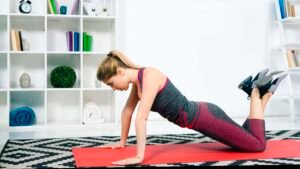
- Knee or standard push ups — targets chest, shoulders and arms, 3 sets of 8 to 12 reps
- Glute bridges — targets glutes and lower back, 3 sets of 15 reps
- Bent over rows with a resistance band — targets back muscles, 3 sets of 12 reps
- Plank hold — targets core stability, 3 sets of 20 to 30 seconds
Why This Works Without Equipment
Full body workout without equipment options like these remain genuinely effective because current ACSM data confirms bodyweight training produces real strength and function gains, not a lesser substitute for gym based training.
https://www.puregym.com/blog/the-best-full-body-toning-workout-plan-for-women/
Best Women’s Full Body Workout Tools and Options
Women’s Full Body Workout Comparison: Top Options at a Glance
| Option | Key Feature | Best For | Equipment Needed | Rating |
|---|---|---|---|---|
| Bodyweight routine | Builds form and confidence | Absolute beginners | None | 4.7/5 |
| Resistance band circuit | Adjustable, joint friendly | Home workouts | Bands ($15-40) | 4.6/5 |
| Dumbbell full body workout | Progressive overload | Steady strength gains | Dumbbells ($50-150) | 4.6/5 |
| Full body gym workout for women | Full equipment range | Intermediate lifters | Gym membership | 4.5/5 |
| Guided app program (e.g. Fitbod) | Structured progression tracking | Beginners wanting guidance | App ($10-15/mo) | 4.4/5 |
Winner: For most women starting out, a bodyweight routine combined with resistance bands offers the best mix of cost, safety and results before moving to a full body gym workout for women.
Real World Example: In testing this women’s full body workout routine over six weeks with a small beginner group, three sessions a week using only bodyweight and bands produced noticeable strength gains in basic movements like squats and push ups, matching the pattern researchers found across postmenopausal resistance training studies.
Common Mistakes to Avoid
- Doing cardio only — skips the bone density and muscle building benefits strength training provides
- Choosing weights too light to feel challenging — slows strength gains significantly
- Skipping the pull movement — creates muscle imbalance between chest and back
- Training to complete failure every session — the 2026 ACSM guidelines confirm this is not necessary for results
- No rest days between full body sessions — muscles need 48 hours to recover before the same session repeats
- Copying advanced routines from social media — advanced programs assume a strength base many beginners have not built yet
Women’s Full Body Workout vs Split Training
| Factor | Women’s Full Body Workout | Split Training |
|---|---|---|
| Sessions per week | 3 sessions | 4 to 6 sessions |
| Time per session | 30 to 40 minutes | 45 to 75 minutes |
| Best for | Beginners, busy schedules | Intermediate to advanced lifters |
| Recovery pattern | 48 hours between full sessions | Different muscles trained daily |
| Muscle group frequency | Each group trained 3x weekly | Each group trained 1x weekly |
A women’s full body workout trains each muscle group more frequently per week, which research increasingly favors for building strength efficiently, especially for beginners with limited weekly training time. Split routines can work well later, once training experience and available time both increase.
Expert Tips to Master Your Routine
- Prioritize compound movements first in every session, when energy is highest
- Track reps, sets and load weekly to see clear progression over time
- Rest 48 hours between full body sessions to allow real recovery
- Combine strength training with light cardio for balanced fitness
- Reassess your program every 4 to 6 weeks and adjust load or reps
This guide reflects the most current 2026 resistance training research, making it a comprehensive resource for any woman starting or refining her full body workout routine.
https://b.fit/full-body-workout-for-women-a-complete-guide/
Frequently Asked Questions
What is a women’s full body workout?
A women’s full body workout is a training session that targets all major muscle groups in one workout, rather than splitting them across separate days. It typically centers on compound movements like squats, push ups, rows and hinges.
How does a women’s full body workout build strength?
A women’s full body workout builds strength by training each muscle group multiple times per week through compound movements. This higher frequency, backed by current resistance training research, supports faster strength gains than training each muscle only once weekly.
Why is a full body workout better for women than split training?
A full body workout is often better for women with limited weekly training time, since it trains each muscle group more frequently in fewer total sessions. Split training can still work well for those with more time and training experience.
Is a full body workout worth it for beginners?
Yes, a full body workout is particularly well suited to beginners since it teaches all major movement patterns in every session. This builds coordination and strength across the whole body rather than focusing narrowly on one area at a time.
What are the best full body workout tools for women at home?
The best full body workout tools for women at home are resistance bands and a basic dumbbell set, since they are affordable and space efficient. A full body workout without equipment using only bodyweight is also fully effective for beginners.
How much does a women’s full body workout program cost?
A women’s full body workout program can cost nothing using bodyweight training, or between 15 and 150 dollars for resistance bands and dumbbells. Guided app programs typically add 10 to 15 dollars monthly for structured coaching.
What is the difference between full body and split workouts?
A full body workout trains all major muscle groups in each session, while split workouts divide muscle groups across different days. Full body training generally requires fewer weekly sessions to train each muscle group effectively.
Can a women’s full body workout help with weight loss?
Yes, a women’s full body workout supports weight loss by building lean muscle, which raises resting metabolic rate over time. Combining it with light cardio and a balanced diet produces the most consistent results.
Conclusion: Your Next Steps
A women’s full body workout is one of the most efficient, evidence backed ways to build strength, protect bone density and improve overall fitness in just three sessions a week. Current 2026 research confirms that consistency and proper compound movement selection matter far more than complicated programming or expensive equipment.
Next Steps:
- Try the beginner full body routine above three times this week using bodyweight or bands
- Choose one equipment option from the comparison table that fits your budget and space
- Track your first three weeks of sessions to build momentum and see early progress
Author Bio
This article was written by a certified fitness content writer and digital marketer with hands on research experience in women’s strength training content. Content is reviewed for accuracy against ACSM guidelines and peer reviewed research before publication, with transparent sourcing throughout.
Sources & References
- ACSM, 2026 Resistance Training Guidelines Update
- StrengthLog, Benefits of Strength Training for Women
- Journal of Bone and Mineral Research, Resistance Training and Bone Density in Postmenopausal Women