
Feeling tired does not always mean you need another cup of coffee, a sugary snack, or more sleep. Sometimes, hydration and energy are connected in a much simpler way: your body may not be getting enough fluid to function normally.
Water does not work like caffeine, and drinking a glass of water does not create energy in the same way food provides calories. However, adequate fluid intake supports many processes involved in normal physical and mental function. When fluid losses are greater than intake, dehydration can contribute to symptoms such as fatigue, headache, difficulty concentrating, and reduced physical performance.
The important point is that there is no single amount of water that works for everyone. Your needs change with body size, activity, climate, diet, age, pregnancy, illness, and other factors.
Key Takeaways
- Hydration and energy are linked, but water is not a stimulant or calorie source.
- Dehydration can contribute to fatigue, reduced alertness, headaches, and poorer physical performance.
- There is no universal “eight glasses” rule that fits every adult.
- Your total water intake includes water from drinks and foods, not just plain water.
- A steady hydration routine is generally more useful than drinking a large amount only after you feel exhausted or thirsty.
- Electrolytes can matter during prolonged sweating, illness, or certain situations, but most healthy adults do not need sports drinks for ordinary daily hydration.
This guide explains how hydration affects energy, how much fluid you may need, what to drink, when electrolytes matter, and how to build a realistic daily hydration routine.

What Is the Connection Between Hydration and Energy?
Hydration and energy are connected because water supports normal circulation, temperature regulation, nutrient transport, waste removal, and many cellular processes. However, water itself does not contain calories and should not be described as an “energy drink” in the nutritional sense.
Your body is constantly losing water through urine, sweat, breathing, and other normal processes. When fluid intake does not keep up with those losses, hydration levels can fall.
The result may not always be dramatic thirst.
You might simply notice:
- Feeling unusually tired
- A headache
- Difficulty concentrating
- Lower physical endurance
- Dry mouth
- Darker urine
- Feeling sluggish during the afternoon
- Reduced ability to exercise comfortably
The CDC notes that dehydration can contribute to unclear thinking and mood changes, while water is necessary for normal body functions.
Does Drinking Water Increase Energy?
Drinking water can help you feel better when low fluid intake is contributing to fatigue, but water does not provide calories or act like caffeine.
This distinction matters.
If you are dehydrated, replacing lost fluids can help your body return toward normal function. You may feel more alert or less tired as dehydration symptoms improve.
But drinking extra water when you are already adequately hydrated does not automatically create extra physical energy.
A useful way to think about it is:
Food provides the fuel. Water helps the body use and transport what it needs to function normally.
That is why hydration should be considered one part of an energy routine rather than the entire solution.
Why Does Low Hydration Make You Feel Tired?
When you lose more fluid than you replace, the body’s fluid balance changes. Dehydration can affect circulation, temperature regulation, physical performance, and cognitive function.
Research reviews have found associations between dehydration and increased fatigue or tiredness, although the effects vary according to the degree of dehydration, the individual, the activity being performed, and the study conditions.
This is also why dehydration and fatigue should not be treated as completely separate issues.
Hydration Supports More Than Energy
The benefits of staying hydrated extend beyond simply feeling energetic.
Adequate fluid intake supports:
- Normal body temperature
- Blood circulation
- Digestion
- Waste removal
- Joint lubrication
- Physical performance
- Normal cognitive function
- Normal bowel function
The CDC specifically notes that water helps regulate body temperature, lubricate joints, protect sensitive tissues, and remove waste.
So if you are trying to improve daily energy, hydration is worth checking alongside sleep, food, physical activity, stress, and caffeine habits.
How Dehydration and Fatigue Are Connected
Dehydration and fatigue often appear together because inadequate fluid balance can interfere with normal physical and mental functioning.
The relationship is not as simple as “less water equals less energy,” but the evidence supports hydration as an important part of maintaining normal performance.
Mild Dehydration Can Affect How You Feel
You do not have to be severely dehydrated before you notice changes.
Research reviewed in the medical literature has reported increases in fatigue and tiredness with relatively modest levels of dehydration in some studies. Effects on mood, attention, and cognitive performance can vary depending on the person and circumstances.
This explains why someone may say:
“I am not extremely thirsty, but I feel strangely tired today.”
Low fluid intake is not necessarily the only explanation, but it is one practical factor to check.
How Hydration Affects Physical Performance
Physical activity increases fluid loss, especially in hot or humid conditions.
Sweating is one of the body’s main cooling mechanisms. If you lose a significant amount of fluid without replacing enough of it, exercise can feel harder.
A review available through the National Institutes of Health notes that dehydration can impair physical performance, particularly during demanding endurance or high-intensity activities.
For someone taking a long walk, exercising outdoors, doing physically demanding work, or spending time in a hot environment, hydration needs can therefore be very different from those of someone sitting in an air-conditioned room.
Can Dehydration Cause Brain Fog?
Dehydration can be associated with reduced alertness, concentration problems, and mental fatigue, although brain fog has many possible causes.
Poor sleep, stress, illness, inadequate food intake, medications, and medical conditions can also cause difficulty concentrating.
That is why it is better to treat hydration as one piece of the puzzle rather than assuming every episode of brain fog is caused by water intake.

Expert Insight
If you regularly feel tired despite drinking enough fluids, do not keep increasing your water intake indefinitely. Persistent fatigue can have many causes, including poor sleep, nutritional deficiencies, medication effects, stress, or medical conditions. Hydration is a useful basic check, not a universal treatment for fatigue.
How Much Water Should You Drink Daily?
There is no single daily water target that is appropriate for every adult.
Your fluid requirements depend on several factors, including age, sex, body size, activity level, climate, diet, pregnancy or breastfeeding, and fluid losses from sweating, fever, vomiting, or diarrhea.
The National Academies established Adequate Intake values for total water, which includes water from beverages and food. For adults ages 19–50, the reference values are about 3.7 liters per day for men and 2.7 liters for women, but these are total water values, not a requirement to drink that much plain water.
How Much Water Do Women Need?
For adult women, the National Academies’ reference value is approximately 2.7 liters of total water per day, including water from foods and beverages.
The amount that comes specifically from drinks is lower because foods such as fruits, vegetables, soups, yogurt, and other foods also contain water.
This is a population-based Adequate Intake, not a personal prescription.
How Much Water Do Men Need?
For adult men, the reference value is approximately 3.7 liters of total water per day, including water from food and beverages.
The National Academies estimated that beverages supplied around 3.0 liters of that amount in the survey data used to establish the reference value.
Again, actual needs vary.
A physically active person exercising outdoors in summer may require substantially more fluid than someone doing light activity in a cool indoor environment.
Does the Eight-Glass Rule Apply to Everyone?
No. The familiar “eight glasses a day” rule is not a universal requirement for every person.
The body regulates fluid balance, and daily needs vary considerably.
A better approach is to consider:
- Your thirst
- Your activity level
- Your climate
- Your food and beverage intake
- Your sweat losses
- Your urine pattern
- Any medical advice you have been given
The CDC also states that daily water needs vary according to age, sex, pregnancy status, activity level, and breastfeeding status.
When Do You Need More Water?
Your fluid requirements may increase when you:
- Exercise
- Work outdoors
- Spend time in hot weather
- Have a fever
- Vomit
- Have diarrhea
- Sweat heavily
- Spend long periods in dry or hot environments
The CDC specifically identifies hot climates, increased physical activity, fever, vomiting, and diarrhea as situations in which the body may need more water.
Hydration and Energy: Best Habits for Steadier Energy
The best hydration habits are simple routines that help you drink consistently rather than trying to catch up after you already feel depleted.
You do not need an expensive bottle, special powder, or complicated hydration app.
Start Your Day With Fluids
After several hours of sleep, you have gone through a period without drinking.
Having water when you wake up can be a simple way to begin your daily hydration routine.
This does not mean you need to force a huge amount of water immediately after waking. A normal glass or the amount that feels comfortable is enough to start.
The goal is consistency.

Keep Water Within Reach
People often drink less simply because water is inconvenient.
Keep a reusable bottle or glass where you naturally spend time:
- At your desk
- In the kitchen
- Near your reading area
- In your work bag
- Beside you during long drives
The easier the healthy choice is, the less effort it requires.
Drink With Meals
Water can naturally become part of your meal routine.
For example:
Breakfast → water
Lunch → water
Afternoon snack → water
Dinner → water
This creates regular reminders without requiring you to think about hydration every few minutes.
Use Thirst as One Signal, Not the Only Strategy
Thirst is useful, but relying exclusively on thirst may not work well in every situation.
Older adults, people exercising heavily, and people in hot conditions may need to pay closer attention to fluid intake.
At the same time, constantly drinking far beyond thirst is not automatically healthier.
The goal is appropriate hydration, not maximum water consumption.
Build a Hydration Habit Around Existing Habits
This is the Hydration Anchor Method, an editorial framework created for this article.
Instead of setting ten separate reminders, attach drinking water to habits you already perform.
For example:
- Wake up → drink water
- Eat breakfast → drink water
- Start work → fill bottle
- Eat lunch → drink water
- Finish exercise → replace appropriate fluid losses
- Eat dinner → drink water
The method works because you are using existing routines as reminders.
https://trustmags.com/how-to-increase-energy-level/
If you are working on your overall energy routine, our guide to daily energy habits can help you look beyond hydration alone.
Make Water Easier to Enjoy
Plain water is usually the simplest choice, but taste can affect whether you drink it consistently.
You can make water more appealing with:
- Lemon or lime slices
- Cucumber
- Mint
- Unsweetened sparkling water
- Chilled water
- A reusable bottle you enjoy using
Avoid turning hydration into another source of unnecessary sugar.
Water vs Electrolytes and Other Drinks
Plain water is appropriate for everyday hydration for most healthy adults, while electrolyte-containing drinks can be useful in specific situations involving substantial fluid and electrolyte losses.
The right drink depends on what your body is losing and why you are drinking it.
| Hydration Option | Best For | Energy Relevance | Main Consideration |
|---|---|---|---|
| Plain water | Everyday hydration | Supports normal function when adequately hydrated | Usually the simplest choice |
| Water-rich foods | Adding fluid through meals | Adds nutrients as well as water | Examples include fruits, vegetables and soups |
| Electrolyte drink | Prolonged sweating or significant fluid loss | May support fluid replacement during demanding activity | Some contain substantial added sugar |
| Milk | Fluid plus protein and nutrients | Can contribute to overall nutrition | Higher calorie than water |
| Unsweetened tea | Fluid plus flavor | Can contribute to fluid intake | Caffeine varies |
| Sugary energy drinks | Temporary stimulant effect | Caffeine may increase alertness | High caffeine and added sugar can be drawbacks |
When Are Electrolytes Useful?
Electrolytes such as sodium, potassium, calcium, and magnesium help regulate fluid balance and support nerve and muscle function.
They become particularly relevant when you lose substantial amounts of sweat or fluid.
For ordinary daily activity, however, most healthy people do not need to replace electrolytes with specialized drinks every time they drink water.
During prolonged or intense exercise, especially in hot conditions, electrolyte and carbohydrate needs become more relevant.
A 2026 review of sports drinks found that appropriate fluid, electrolyte, and carbohydrate intake can help maintain hydration and exercise performance, while also emphasizing that effectiveness depends on the beverage composition, amount, timing, exercise conditions, and individual factors.
Do You Need Sports Drinks for Daily Energy?
Usually, no. Sports drinks are designed for specific exercise and fluid-replacement situations, not as a general solution for everyday tiredness.
If you are sitting at a computer, doing household tasks, or taking a normal walk, plain water is usually a much simpler option.
Sports drinks can make sense during prolonged, sweaty exercise, but they can also contain added sugar and calories.
What About Coffee and Tea?
Coffee and tea contain water and therefore contribute to fluid intake.
Caffeine can temporarily increase alertness, but it should not be used as a replacement for adequate hydration, food, or sleep.
If caffeine is consumed late in the day and interferes with sleep, the resulting tiredness may create a cycle in which more caffeine is used the next day.
For a better energy routine, think of caffeine as one tool rather than the foundation.
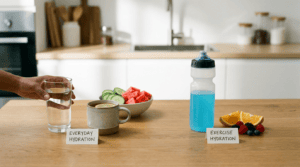
Common Hydration Mistakes That Can Drain Your Energy
Many hydration problems come from inconsistent habits rather than a complete lack of access to water.
Mistake 1: Waiting Until You Feel Exhausted
If you spend the entire morning drinking almost nothing and then try to compensate in the afternoon, you may find it difficult to drink enough comfortably.
A better strategy is steady intake throughout the day.
Mistake 2: Treating Water Like an Energy Drink
Water does not contain calories.
If your fatigue is caused by skipping meals, poor sleep, or another issue, drinking water alone will not provide the missing energy.
This is one reason hydration and energy should be viewed as connected but separate concepts.
Mistake 3: Replacing Meals With Water
Water is essential, but it does not replace food.
If you have gone many hours without eating, your body also needs energy and nutrients from food.
For a practical example, combine hydration with balanced meals containing carbohydrates, protein, healthy fats, fruits, and vegetables.
If you want to explore the food side of this equation, see our guide below.
https://trustmags.com/foods-that-give-you-energy/
Mistake 4: Drinking Huge Amounts at Once
More water is not automatically better.
Drinking excessive amounts of water quickly can be dangerous because it can dilute blood sodium and lead to hyponatremia.
For most people, a steady approach makes more sense than trying to hit a huge target in a short period.
Mistake 5: Assuming Every Tired Feeling Is Dehydration
Fatigue is a symptom, not a diagnosis.
Poor sleep, stress, low iron, inadequate food intake, medication side effects, infections, thyroid problems, depression, sleep apnea, and other medical conditions can cause tiredness.
If fatigue is persistent, severe, worsening, or accompanied by other concerning symptoms, speak with a healthcare professional rather than simply increasing water intake.
https://trustmags.com/why-am-i-so-tired/
If tiredness continues despite improving basic habits, this broader guide can help you understand other possible factors worth discussing with a healthcare professional.
A Simple Hydration and Energy Routine
The easiest hydration plan is one you can actually maintain.
Here is a simple Hydration-Energy Check System, an editorial framework designed to help you identify where your routine may be breaking down.
Step 1: Check Your Morning
Ask:
- Did I drink anything after waking?
- Am I unusually thirsty?
- Is my urine much darker than usual?
- Did I sleep poorly?
Do not interpret one sign in isolation. Look at the overall pattern.
Step 2: Check Your Meals
Ask whether you are eating regularly enough.
Hydration cannot compensate for consistently skipping meals or relying on sugary snacks.
Pair fluids with balanced meals and snacks.
Step 3: Check Your Activity
If you are exercising, walking for a long time, working physically, or spending time outside in hot weather, your fluid losses may increase.
Increase fluids appropriately rather than following the same amount every day.
Step 4: Check Your Afternoon
The afternoon is a useful time to notice patterns.
If you repeatedly experience:
- Headache
- Thirst
- Dry mouth
- Sluggishness
- Reduced concentration
look at your morning fluid intake before immediately reaching for another caffeinated drink.
Step 5: Check Your Evening
Avoid turning hydration into a late-night task.
If you drink very large amounts immediately before bed, you may wake repeatedly to urinate, which can interfere with sleep.
The better strategy is to spread appropriate fluid intake across the day.
A Practical Daily Example
Consider a hypothetical office worker named Sarah.
Sarah begins work at 8 a.m. She drinks coffee but almost no water until lunchtime. By 2 p.m., she has a headache and feels exhausted. She assumes she needs another coffee.
Instead, Sarah changes her routine:
Morning: Water with breakfast
Work: Keeps a bottle at her desk
Lunch: Water with the meal
Afternoon: Drinks regularly instead of waiting until she feels very thirsty
Exercise: Adjusts fluid intake according to how much she sweats
Evening: Avoids trying to consume most of the day’s fluids immediately before bed
This does not prove that hydration caused Sarah’s fatigue. It simply illustrates how a consistent routine can make fluid intake easier to manage.
The key lesson is that hydration habits work best when they are built into daily life rather than treated as an emergency fix.
Hydration and Energy Comparison: Which Habit Helps Most?
Different hydration habits solve different problems.
| Habit | Best Use | Effort | Potential Benefit |
|---|---|---|---|
| Keep water nearby | Everyday consistency | Low | Makes regular drinking easier |
| Drink with meals | Routine building | Very low | Creates natural reminders |
| Carry a bottle | Work, travel, errands | Low | Improves access to fluids |
| Increase fluids during heat | Hot weather | Low | Helps replace increased losses |
| Replace fluids after heavy sweating | Exercise | Moderate | Supports recovery from fluid loss |
| Use electrolyte drinks selectively | Prolonged intense activity | Moderate | Replaces fluids and some electrolytes |
Best overall approach: combine several low-effort habits rather than searching for one “perfect” hydration trick.
Expert Tips for Better Hydration Habits
Use the “Bottle Visibility” Rule
If water is hidden in the kitchen while you spend six hours at your desk, you may forget about it.
Keep it visible and accessible.
Pair Hydration With Your Phone Habits
Instead of adding another complicated app, use normal daily events as cues.
For example:
- After checking email
- After a bathroom break
- Before lunch
- Before leaving home
- After returning from a walk
The purpose is not to drink huge amounts at each cue. It is simply to remember fluids regularly.
Choose Water Over Sugary Drinks More Often
Water contains no calories.
The CDC notes that replacing sugary drinks with plain water can reduce calorie intake.
This makes water useful not only for hydration but also as a simple way to reduce unnecessary liquid calories.
Remember That Food Contains Water
Your hydration does not come only from the glass in your hand.
Fruits, vegetables, soups, yogurt, milk, and other foods contain water.
This is one reason total water intake is different from plain-water intake.
Adjust for Your Environment
Someone living in a hot climate or exercising outdoors will have different fluid needs from someone sitting indoors in a cool environment.
Do not copy another person’s exact water target simply because it works for them.
Frequently Asked Questions
What is hydration and energy?
Hydration and energy describes the relationship between adequate fluid balance and how your body feels and performs throughout the day. Water does not provide calories, but adequate hydration supports normal circulation, temperature regulation, digestion, physical performance, and cognitive function. Dehydration can contribute to fatigue and reduced alertness.
How does hydration and energy affect daily fatigue?
Poor hydration can contribute to daily fatigue when fluid losses exceed intake. Dehydration may be associated with tiredness, headaches, difficulty concentrating, and reduced physical performance. However, fatigue has many possible causes, so improving hydration should not be treated as a complete solution for persistent tiredness.
Why is hydration and energy important?
Hydration matters because your body needs water for many normal physiological processes that support physical and mental function. When fluid balance is disturbed, symptoms such as thirst, headache, fatigue, and reduced performance can occur. Maintaining appropriate hydration is therefore one useful part of a broader healthy lifestyle.
Does drinking water increase energy?
Drinking water can improve how you feel if dehydration is contributing to fatigue, but water does not provide calories or function like a stimulant. If you are already adequately hydrated, drinking additional water does not automatically create extra energy. Persistent fatigue should be investigated more broadly.
How much water should you drink daily?
There is no single amount that fits everyone. National Academies reference values for total water are about 3.7 liters per day for adult men and 2.7 liters for adult women, including water from food and beverages. Actual needs vary with activity, climate, age, pregnancy, diet, and fluid losses.
Can dehydration cause fatigue?
Yes, dehydration can contribute to fatigue and tiredness. Research reviews have found increased fatigue or tiredness in association with dehydration, although the size of the effect varies between studies and individuals. Other causes of fatigue must also be considered.
What are the benefits of staying hydrated?
The benefits of staying hydrated include supporting normal temperature regulation, circulation, digestion, waste removal, physical performance, and cognitive function. Adequate water also helps prevent dehydration. The CDC identifies water as essential for normal body functions and notes that dehydration can cause symptoms including unclear thinking and mood changes.
Can electrolytes improve energy levels?
Electrolytes can support fluid balance and muscle and nerve function, particularly when substantial amounts are lost through sweat or illness. They are not a general energy booster, however. For ordinary daily hydration, most healthy adults can rely mainly on water and a balanced diet.
Is water better than energy drinks for hydration?
For everyday hydration, plain water is generally the simpler choice. Energy drinks may contain caffeine and sugar, which can temporarily increase alertness or provide calories, but they are not necessary for ordinary hydration. Their ingredients and effects are different from those of water.
Can drinking more water fix constant tiredness?
Drinking enough water may help if dehydration is contributing to your tiredness, but it cannot fix every cause of fatigue. Persistent tiredness can result from poor sleep, stress, nutritional deficiencies, medications, infections, or medical conditions. If fatigue continues, seek appropriate medical advice instead of continually increasing water intake.
Does coffee dehydrate you?
Coffee contributes to fluid intake, although caffeine has a mild diuretic effect. Moderate caffeinated drinks can still contribute to daily fluid intake for many people. The bigger concern may be caffeine’s effect on sleep if it is consumed too late in the day.
Should you drink water before exercising?
Drinking fluids before exercise can help you begin activity adequately hydrated. The amount depends on your starting hydration, exercise duration, temperature, and expected sweat losses. During prolonged or intense exercise, especially in heat, fluid and electrolyte needs may increase.
What is the easiest way to stay hydrated all day?
The easiest method is to make hydration part of routines you already follow. Drink with meals, keep water nearby, carry a bottle when leaving home, and pay attention to thirst and increased fluid losses during heat or exercise. Consistency is generally easier than trying to catch up at night.
Quick Summary
Hydration and energy are related, but water is not a source of calories or a replacement for sleep and food.
- Dehydration can contribute to fatigue, headaches, reduced concentration, and poorer physical performance.
- Daily water needs vary, so there is no universal amount that every person should drink.
- Total water includes fluids from beverages and water found naturally in food.
- Plain water is usually enough for everyday hydration.
- Electrolytes become more relevant when fluid and electrolyte losses are substantial.
- A consistent routine is more practical than drinking a large amount of water only after you feel exhausted.
Conclusion: Make Hydration Part of Your Energy Routine
The relationship between hydration and energy is real, but it is often misunderstood.
Water does not work like caffeine, and drinking more than your body needs will not create unlimited energy. What appropriate hydration can do is support the normal processes your body relies on for circulation, temperature control, physical performance, digestion, and mental function.
The most useful approach is simple: drink regularly, adjust your intake when activity or heat increases fluid loss, eat balanced meals, and do not assume that every episode of fatigue is caused by dehydration.
Next Steps
- Keep water within reach tomorrow and notice how consistently you drink.
- Pair water with existing habits, such as breakfast, lunch, and afternoon breaks.
- Look at the whole energy picture, including sleep, meals, movement, stress, and caffeine.
If you regularly feel tired even when your hydration, sleep, and diet seem adequate, do not keep chasing the problem with more water. Talk with a healthcare professional about persistent fatigue.
Author / Editorial Note
This article was prepared by the TrustMags Editorial Team using publicly available guidance and research from organizations and scientific sources including the CDC, National Academies, and peer-reviewed medical literature. No medical credentials, clinical experience, or first-hand testing are claimed. The article is intended for general health education and should not replace individualized medical advice.
Sources & References
- Centers for Disease Control and Prevention (CDC) — About Water and Healthier Drinks
- National Academies — Dietary Reference Intakes for Water, Potassium, Sodium, Chloride, and Sulfate
- PubMed Central — Narrative Review of Hydration and Selected Health Outcomes in the General Population
- PubMed Central — Water, Hydration and Health
- PubMed Central — Sports Drinks for Rehydration, Amelioration of Fatigue, and Recovery from Exertion (2026)
Health Disclaimer: This article is for general educational purposes only and does not replace professional medical advice, diagnosis, or treatment.


One thought on “Hydration and Energy: How Water Can Affect Your Daily Energy”